Basil Loves Shade When August Gets This Hot
A giant Tulsi basil is thriving in the shade of the patio this August, proof that basil doesn't need full sun all day to grow big, juicy leaves.
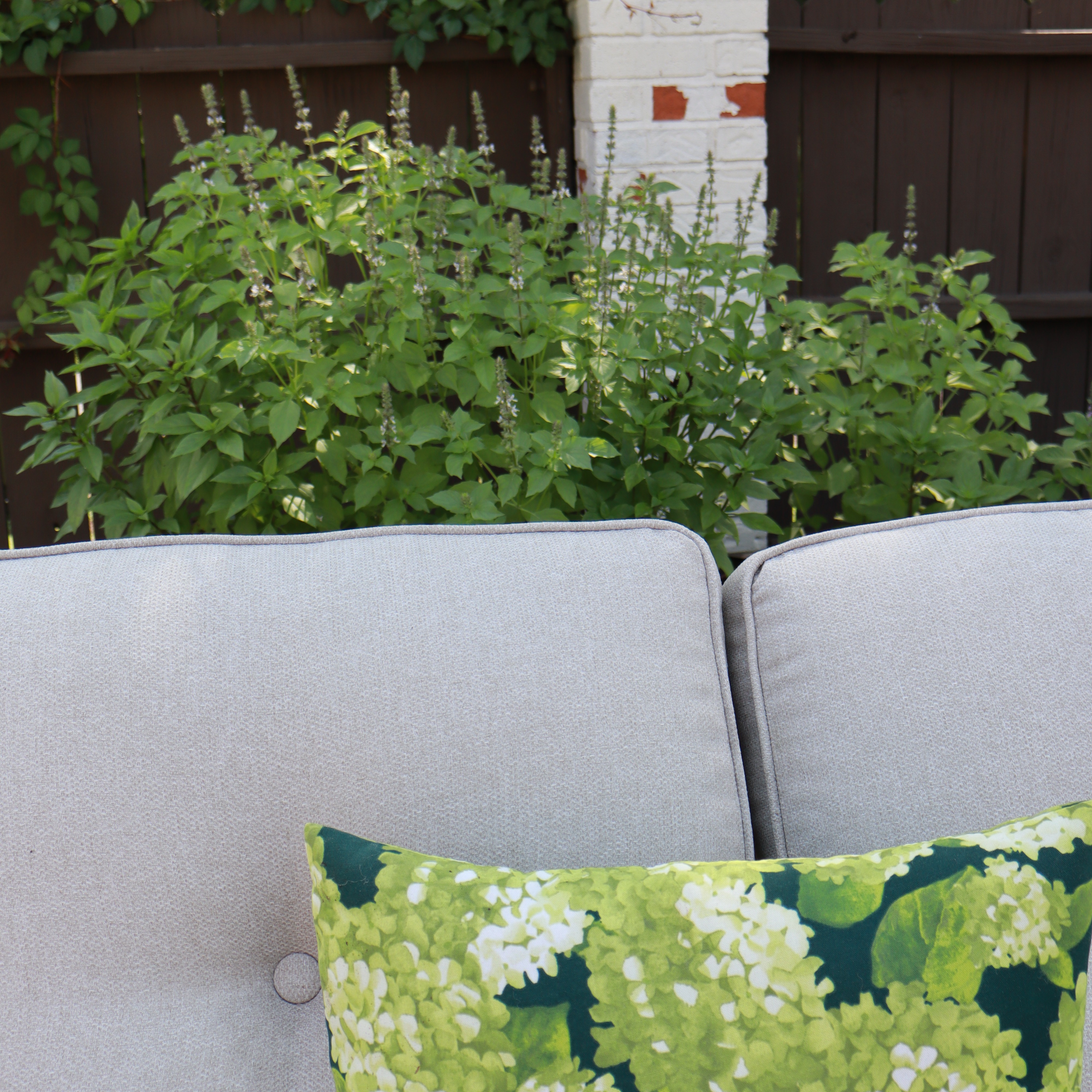
This Tulsi basil is spending August in the shade of the patio, right behind the outdoor sofa, and it's thriving there. The heat index has been hitting the 100s this week, and full sun would have this plant scorched and shriveled by noon.
Basil is one of the few herbs that actually prefers a break from direct sun once summer temperatures climb. In a spot with dappled or afternoon shade, the leaves grow larger and juicier - the plant stretches to gather what light it can, and that stretching produces more leaf surface. Full sun all day, especially in a heat wave, pushes the plant into stress mode. Leaves go small, thin, and papery.
Look closely at this plant and you'll see flowering spikes starting to form at the tips. That's a sign the plant is moving from leaf production into seed production. Pinch those spikes back and the plant keeps putting energy into leaves. Leave them and you'll get flowers, then seed, then a plant that slows down on leaf growth. Both paths work - it depends on what you want from the plant this time of year.
For gardeners in hot climates, a patio bed with afternoon shade or a spot under taller companions works well for basil from midsummer on. Morning sun and afternoon shade is close to ideal. A garden without natural shade can still get there with a light shade cloth stretched over just the basil.
Harvested basil doesn't have to be used fresh. Cut the stems, hang them upside down somewhere dry with good air movement, and let them air dry fully before storing the leaves whole or crumbled in a jar. Dried Tulsi, or holy basil, makes a good tea for cold and flu season. Steep it hot for a soothing cup, or make a big batch and chill it for an iced drink when a summer cold hits and hot tea doesn't sound appealing.
A few things to watch with basil in high heat: check the soil daily, since containers and raised beds dry out fast above 95 degrees, and water at the base rather than overhead to keep fungal issues off the leaves. Basil planted near tomatoes benefits both plants - some gardeners say it improves flavor, and it draws in pollinators once it flowers, which helps the whole bed.
Keep harvesting through the last weeks of summer and this basil will keep producing new leaves. Once nights cool down, expect it to slow and eventually decline, so this stretch is a good time to dry as much as possible for winter tea.
Want a plan that matches your zip code?
Get your free planting calendar →