Bell Peppers, Timing, and Finally Staking Them
Bell peppers have never come easy in my Tennessee garden - this year timing and staking finally paid off with a full bowl of green, orange, and yellow.
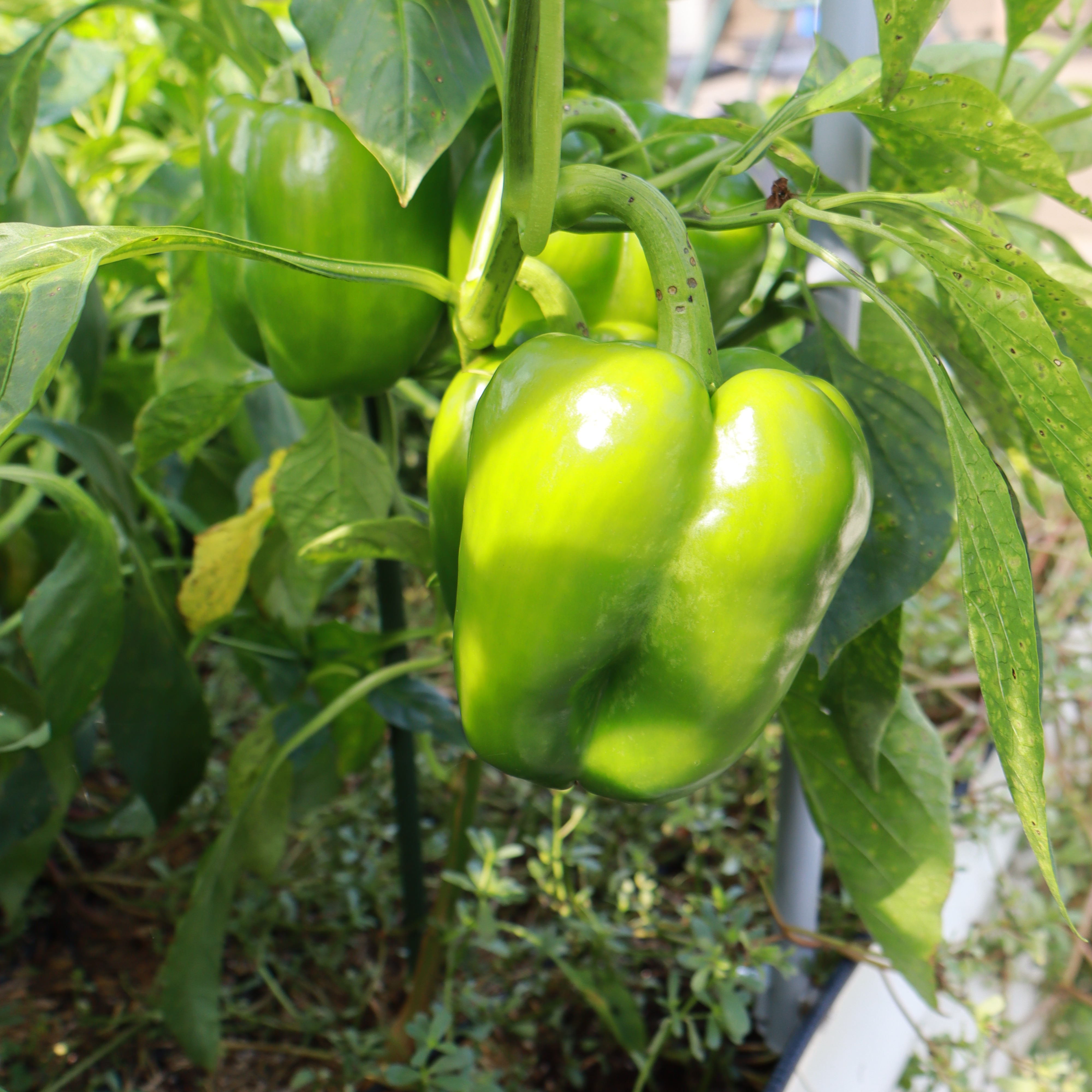
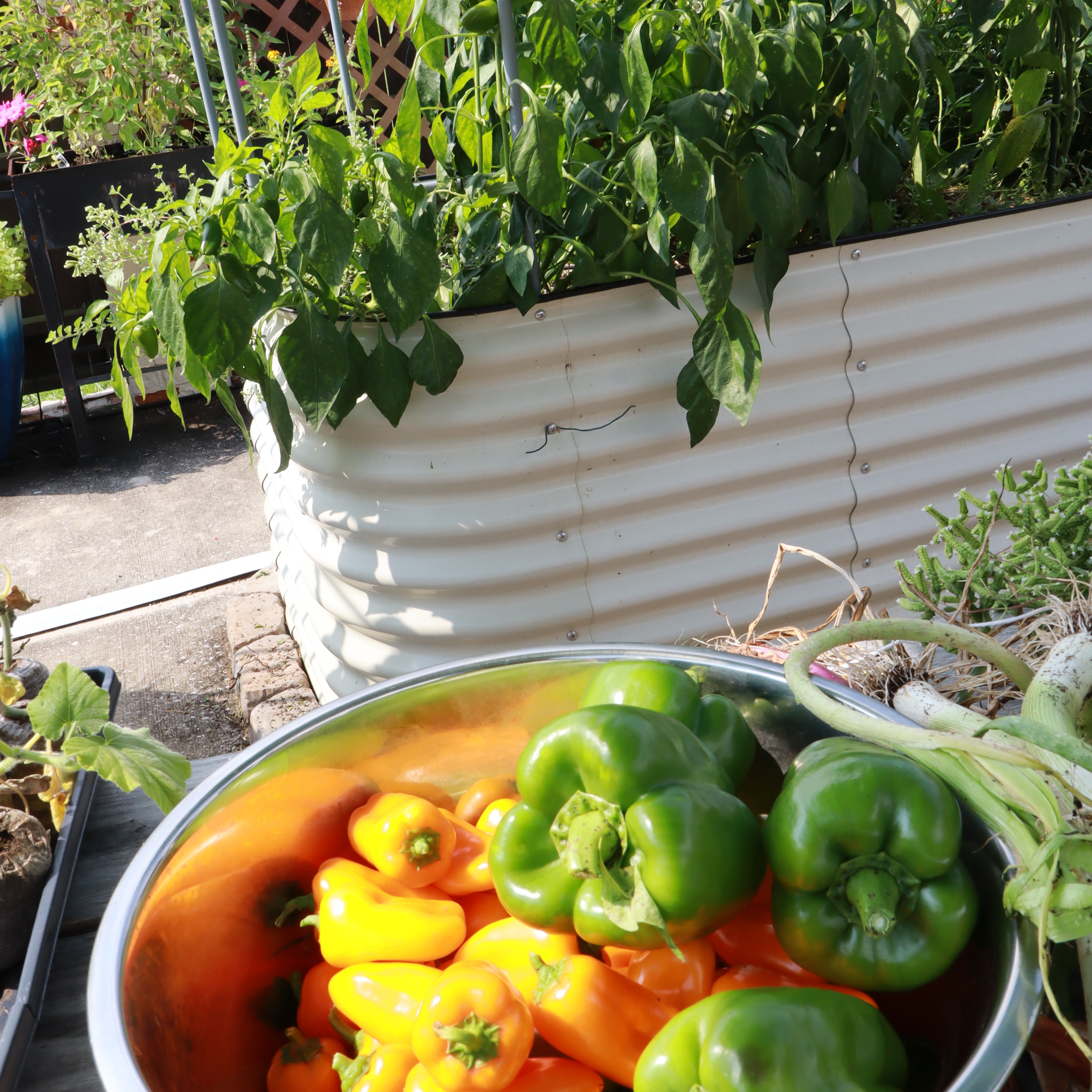
Bell peppers have never come easy for me here in Tennessee. Every year I tell myself this is the year I get the timing right, and every year I learn the same lesson: peppers need to go into the ground early enough to build a big plant before they ever think about setting fruit.
The photos here show two chapters of the same story. In the first, green peppers hang heavy on broad-leafed plants, still weeks from full color. In the second, a metal bowl holds the payoff - green, orange, and yellow fruit pulled from a container garden bed full of leafy, upright plants.
Timing is the whole game with peppers in this climate. Set transplants out too late and the plant spends the hottest part of summer just trying to grow leaves and stems instead of putting energy into fruit. A pepper plant needs a real head start - strong roots and a good frame of branches before the heat settles in - or it spends the season playing catch-up.
Staking turned out to be the other half of the lesson. Pepper stems look sturdy early on, but once the branches load up with fruit, they bend and snap fast, especially in a container bed where roots don't have as much room to anchor the plant. A simple stake or a length of rebar driven in near the base, tied loosely with soft garden twine, keeps the whole plant upright through a heavy harvest. I keep a running note now - "Future Friday: stake your peppers, please" - past-me clearly needed the reminder more than once.
A container bed like the one pictured warms up fast in spring, which gives an early edge for getting pepper transplants in without waiting on the ground to warm the way an in-ground bed would. The tradeoff is that containers dry out faster in the peak of summer, so steady watering matters more once fruit starts to size up. A layer of mulch on top of the soil helps buffer that swing between wet and dry.
For anyone starting out with peppers, the short version is this: start transplants (or buy them) early enough to get a full-sized plant before fruit sets, stake before the plant needs it rather than after, and keep the soil evenly watered through the hottest stretch. Peppers reward patience with a mix of colors on the same plant if some fruit rides past green into orange and yellow, like the ones in the bowl here. Green peppers are simply peppers picked before they finish ripening - left on the vine, most varieties turn color and sweeten over time.
This bed shows a good example of succession within one crop - some fruit ready now, some still sizing up, which stretches out a single planting's harvest window instead of dumping the whole crop at once. A pepper plant, once established, keeps producing steadily rather than all at once.
Want a plan that matches your zip code?
Get your free planting calendar →