Cat Grass Makes the Table on Caturday
A tray of fresh cat grass turns Caturday into a full garden event - even the cat gets a harvest day.
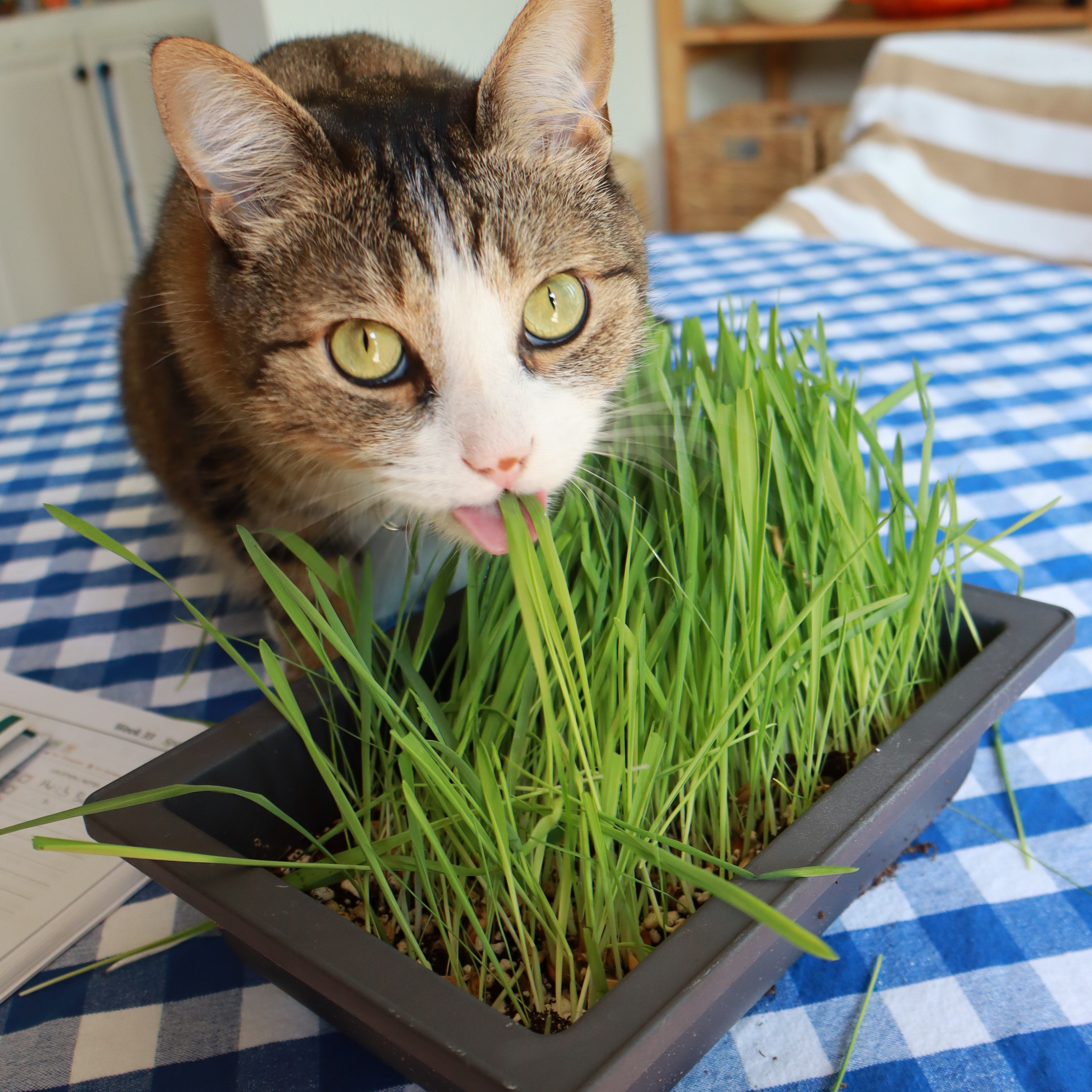
Every garden feeds more than the people who tend it. On Caturday the harvest moves straight from tray to table, and the diner has whiskers.
Cat grass - usually a mix of wheat, oat, and barley seed - grows fast and asks little from a gardener. Seed goes into a shallow tray of potting soil, gets a good watering, and sits in a bright spot. Green blades push up within a week. No outdoor bed, no full sun, no fuss with pests. A windowsill or a sunny counter does the job.
Cats gravitate to grass for a few reasons. It gives them fiber, helps move along anything swallowed during grooming, and gives an indoor cat a taste of the outdoor world. A cat missing a patch of yard to nibble on will often go straight for a houseplant instead, and that's a good reason to keep a tray growing on rotation.
A tray this size lasts about a week or two before it gets grazed down to stubble. Starting a new tray every ten days or so keeps a fresh supply coming, and the seed is cheap enough that running two or three trays in a small rotation costs almost nothing. Old trays compost right into the garden beds, so nothing goes to waste.
For anyone starting this for the first time: skip grass seed treated for lawns, and skip anything with fertilizer mixed in. Plain, untreated wheat or oat seed sold for sprouting or for cat grass kits is the safer route. A tray kept out of reach of curious paws for the first few days lets the roots set before the grazing starts.
This kind of small-scale growing fits into a bigger garden habit: not every bed or tray needs to produce something for the kitchen. Some of it is just for the household's other residents, and a cat with its own patch of green is one more sign that the garden serves the whole home.
Want a plan that matches your zip code?
Get your free planting calendar →