Garlic Chives Planting Guide for the South
Garlic chives earn their space. They handle heat and winter, feed pollinators with white blooms, and keep coming back for the kitchen.
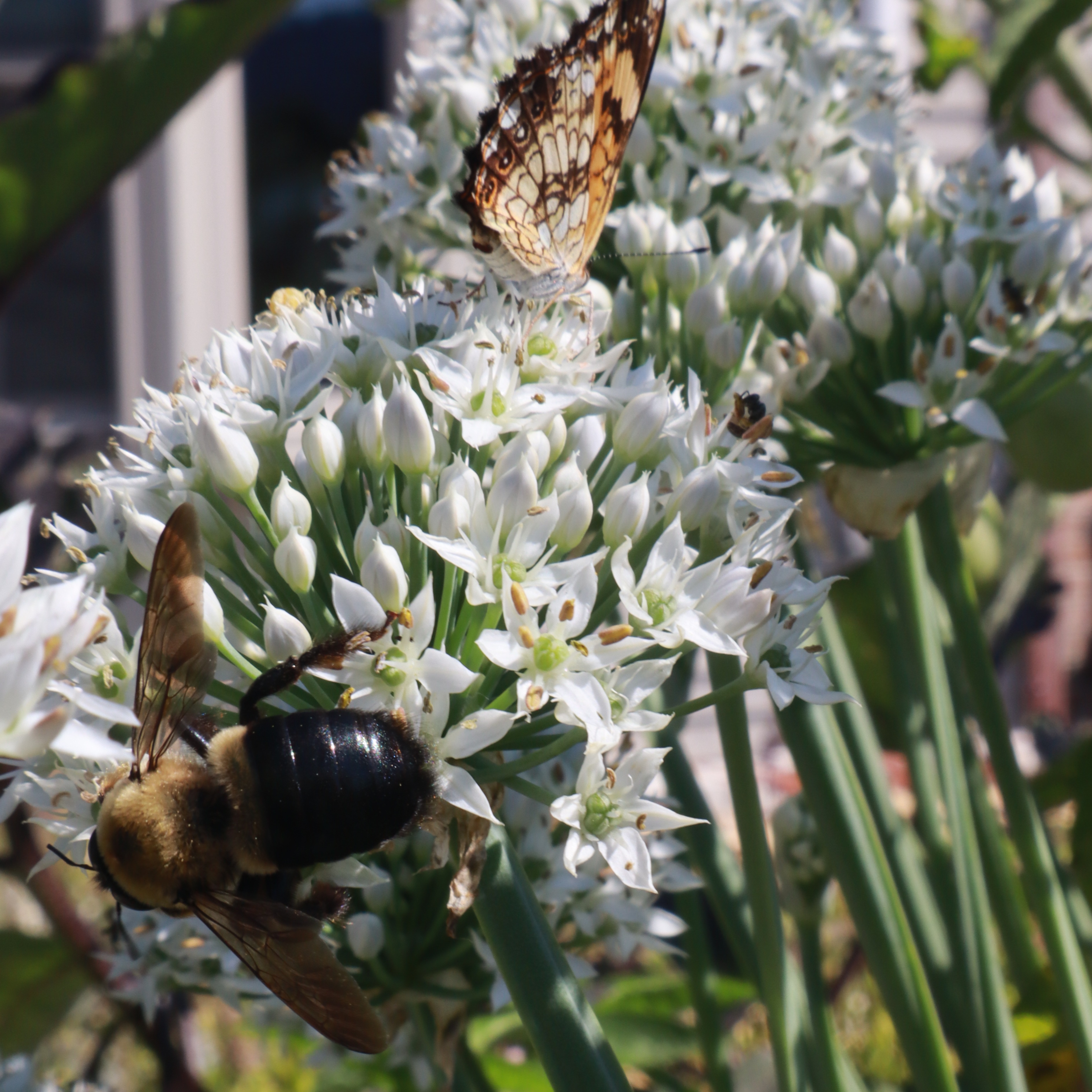
Garlic chives are one of those plants I keep making room for. They don't need babying. Mine live through winter, summer, and plenty of neglect, then send up these lovely white flowers covered in critters.
And I just love how critters share. In the photo, a bumblebee and butterfly are feeding from the same patch of blooms. This is exactly why I let my chives flower instead of cutting every stalk for the kitchen.
Growing garlic chives in the South
Garlic chives are perennial alliums. Plant them in sun to partial shade in soil that drains well. Once established, the clump returns year after year. Regular garden soil works fine for me. A little compost around the plants gives them plenty to work with.
They tolerate Southern heat far better than many leafy herbs. Water young plants regularly until the roots settle in. Established clumps are much less demanding, though they'll appreciate water during long hot, dry stretches.
Timing varies with climate. Spring and fall are both useful planting windows across much of the South. Gardeners farther north can check their local extension service for winter hardiness and planting dates.
Let some of those flowers stay
Garlic chives produce white flower clusters late in their growing season, and pollinators find them fast. Bees, butterflies, and other insects work through the blossoms for nectar and pollen.
I harvest leaves through the growing season, then leave plenty of flower stalks alone. That's my favorite kind of garden arrangement - food for me and food for them.
Once flowering finishes, the plants can make seed. Cut spent flower heads before seeds mature if you don't want volunteers popping up nearby. Leave a few if you're fine with a little chaos. I am a chaos gardener, so volunteers don't particularly offend me.
Older clumps eventually get crowded. Dig and divide them in spring or fall, then replant sections or hand extras to somebody who gardens. Easy.
Harvesting garlic chives
Cut the flat green leaves near the base and let the plant regrow. Don't scalp a small or newly planted clump. Give it enough foliage to keep growing.
The leaves have a mild garlic flavor. I use them anywhere I want garlic without hauling out an actual clove - eggs, potatoes, soups, dumplings, salads, compound butter. The flowers are edible too. Separate the little florets and scatter them over something that needs a mild onion-garlic bite.
Grocery store herbs are gross half the time and inflation is high. A perennial herb that comes back, asks for very little, feeds pollinators, and gives me something useful for dinner earns permanent garden status around here.
Garlic chives really are that awesome.
Want a plan that matches your zip code?
Get your free planting calendar →