Direct Sowing Cool Season Seeds in Late Summer
Fall planting can start long before fall weather arrives. Shade cloth, drip irrigation, and careful timing give cool-season seeds a fighting chance in hot soil.
Fall garden timing gets weird when September still feels like summer. Chard, carrots, and spinach need time to germinate and grow before short winter days slow everything down. Yet hot soil can make germination erratic, especially with spinach.
This is one of those times when waiting for perfect weather doesn't work for me. The calendar says plant. The thermometer says absolutely not. Whatever. I work around the heat.
I direct sow early enough to catch the remaining daylight, then give the seed bed some protection. I run drip irrigation early in the morning and use shade cloth over newly planted areas. The goal isn't to make the bed cold. I just want to take the edge off the afternoon sun and keep the top layer of soil from drying out between waterings.
Carrot seed is particularly unforgiving. It's tiny, planted shallowly, and germination can take a while. If that thin surface layer dries out, germination gets spotty fast. Chard is much more accommodating in my experience. Spinach can be downright obstinate in hot soil. I still plant it when my seasonal timing calls for it, knowing I may need another sowing.
Check the bed every day. Stick a finger into the soil rather than judging it from the surface. Drip irrigation uses water right where I need it, and mulch around established plants helps reduce evaporation. Keep heavy mulch away from the actual seed row until seedlings are up. Tiny seedlings shouldn't have to fight through a bale of straw.
Shade cloth needs good airflow underneath it. I like a cover supported above the bed rather than material lying directly on seedlings. Once plants are established and temperatures moderate, I start removing the extra protection. Watch the plants rather than following an arbitrary number of days.
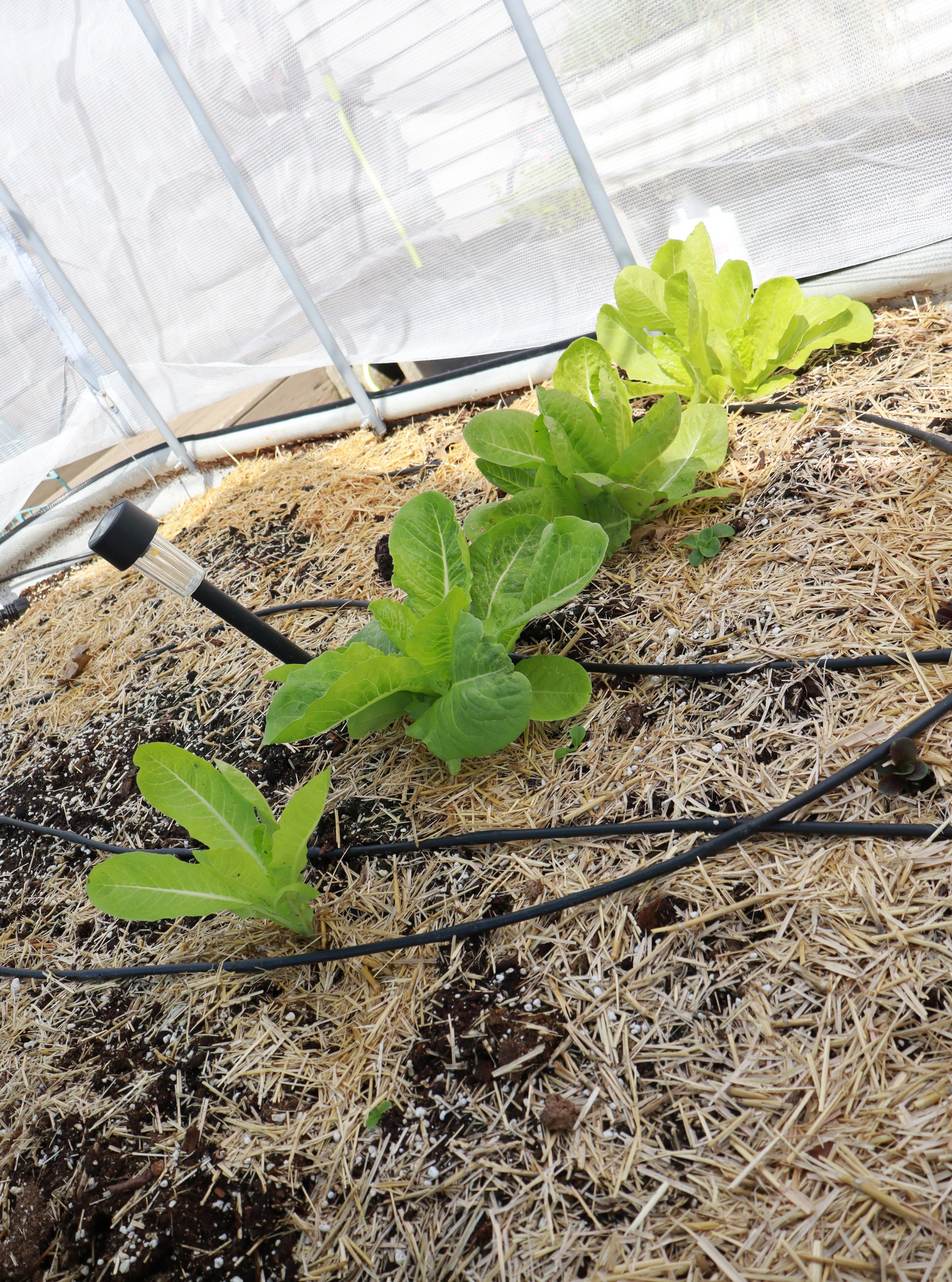
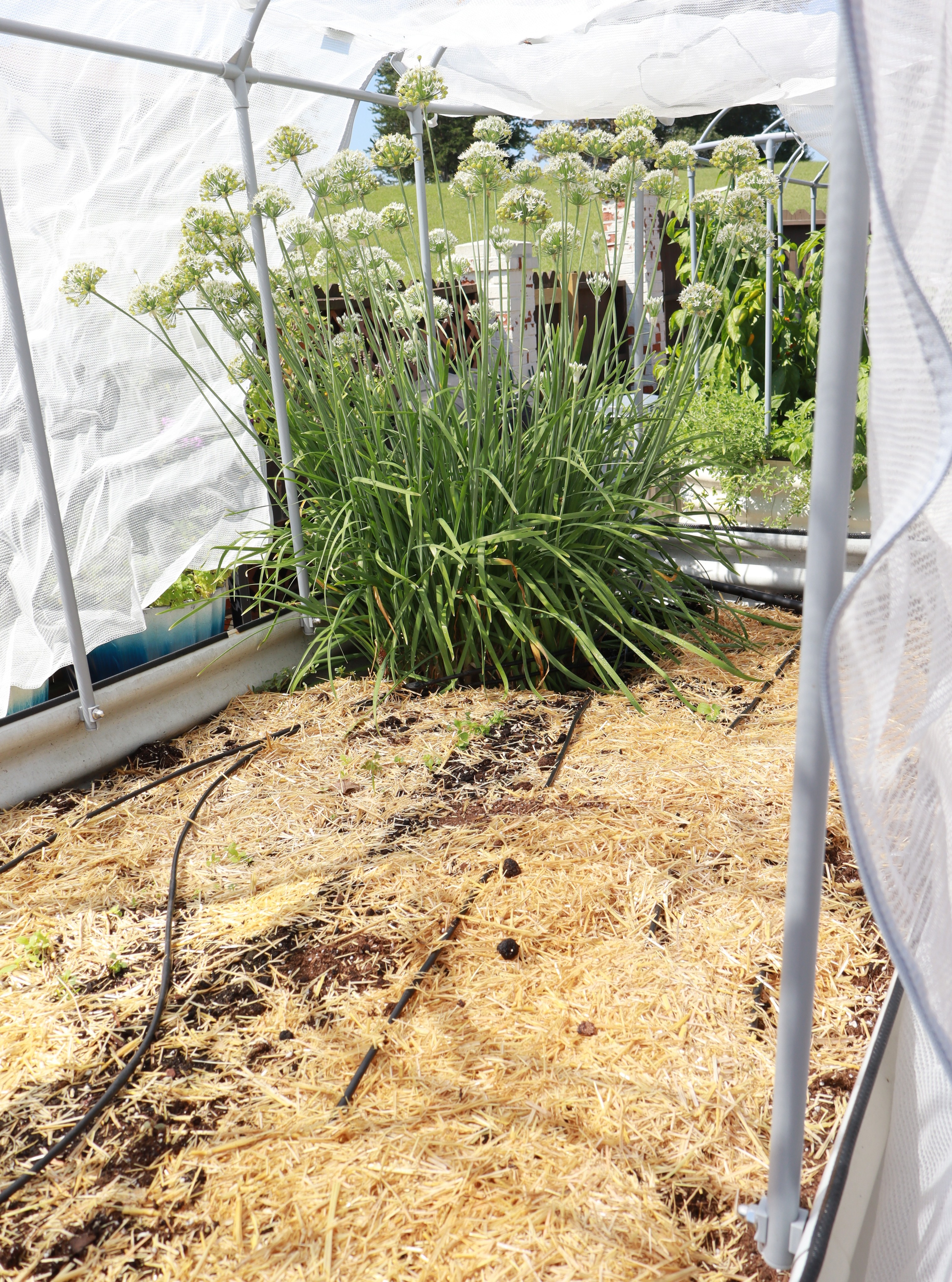
Protected growing isn't only useful for germination. The lettuce in my covered bed is a good example of how protection can stretch cool-season growing at either end of the season. Mature chives nearby show the other side of a kitchen garden - perennial herbs keep doing their thing as annual beds change crops. Their flowers are useful to insects too, so I leave plenty of blooms standing.
Your exact sowing window depends on latitude, first frost timing, and the crop. Southern gardeners can still be dealing with serious heat when northern gardeners are already watching for frost. Count backward from your typical cold weather, check the days to maturity on the seed packet, and leave some extra time for slower growth under shorter days. The interwebs help with local frost dates.
And don't put all your faith in one sowing. I learned the hard way. Plant a small row, then sow another a week or two later if your season permits. A heat wave can wreck one batch and spare the next.
Fall direct sowing doesn't need to become a complicated project. Seeds, water, some temporary shade, and a daily walkthrough will get you a long way. Start small. Pay attention to what actually germinates in your garden, write it down, and adjust next year. That's much more useful than pretending every seed packet knows your weather better than you do.
Want a plan that matches your zip code?
Get your free planting calendar →