Fall Planting and My First Look at Kirigami Ornamental Oregano
A morning in Helen's flower garden introduced me to Kirigami ornamental oregano. Here's why fall is such a good time to plant in warm Southern climates.
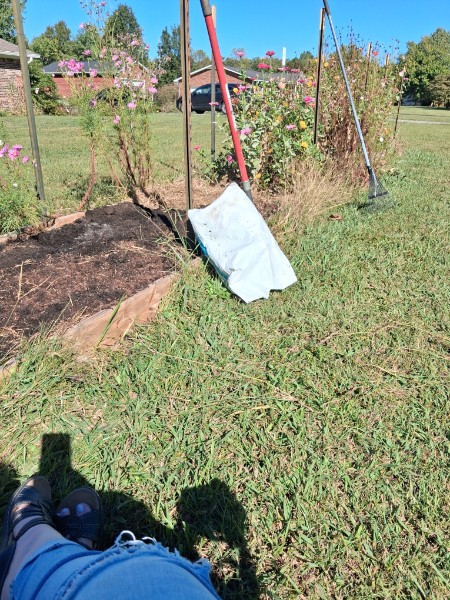
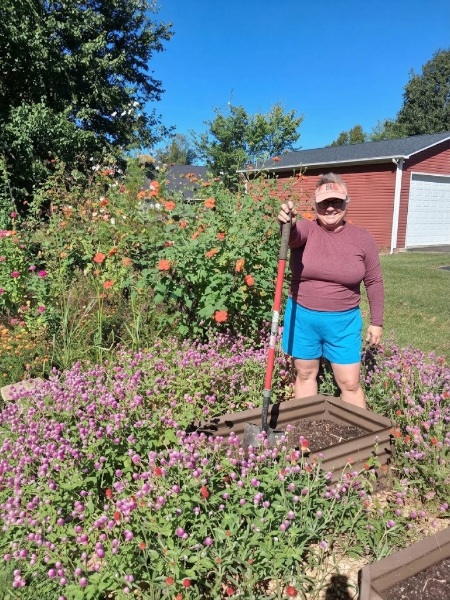
My friend Helen grows amazing flowers. I helped her in the garden this week. By helped, I mean I sat and watched her work. Somebody had to supervise. :)
We went outside early, when the morning air was cool enough to make gardening pleasant again. Helen was prepping beds, moving things around, and doing actual work. I was admiring her plants.
And then she showed me something I'd never seen before.
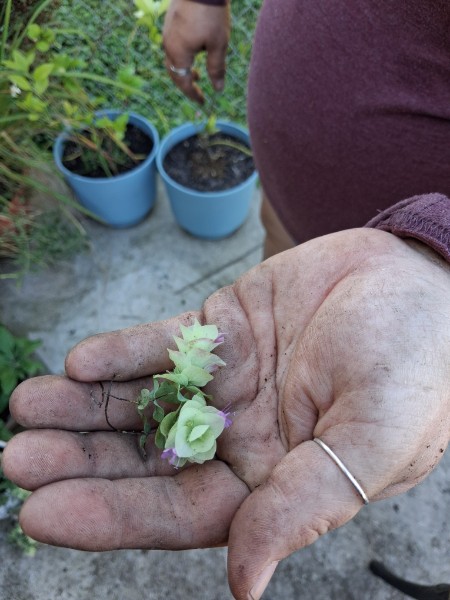
Kirigami Ornamental Oregano. Where Has This Been All My Life?
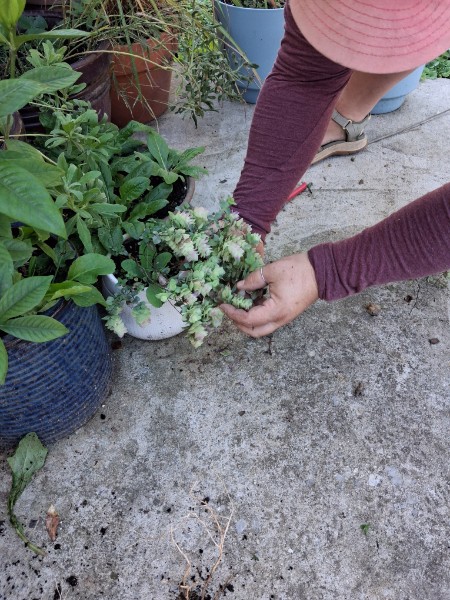
Helen had a pot of Kirigami ornamental oregano growing on her lanai. It's absolutely gorgeous.
The flowers look like tiny green-and-pink paper lanterns hanging in clusters. The papery bracts start out green and develop pink and purple tones as they mature. It's such an unusual little plant.
I've grown oregano for cooking, but this is something entirely different.
Kirigami is an ornamental oregano grown for its flowers rather than its flavor. It's not the oregano you'd harvest for pizza sauce. This one earns its space by looking good.
And I'm perfectly fine with that.
I like plants that do more than one job, but sometimes being beautiful is enough. The flowers can attract bees and other pollinators, which gives this little plant another reason to earn a spot in the garden.
Growing Ornamental Oregano in the South
Kirigami oregano likes sunshine and excellent drainage. Those are the two big things to get right.
It's a good candidate for containers, particularly in warm, humid climates where garden soil can stay wet longer than Mediterranean herbs prefer.
Helen's plant was growing in a pot on her lanai, which makes sense. Containers give you more control over drainage, and you can move them around when the weather gets ridiculous.
A few things to know about growing it:
- Give it plenty of sun. Around six hours of direct sunlight is a good starting point. Some afternoon protection can help during brutal Southern summers.
- Use a well-draining potting mix. Add perlite or pumice if your mix holds too much water.
- Water when the top inch or two of soil feels dry. Don't leave the pot sitting in water.
- Skip heavy fertilizer. Too much feeding can encourage leafy growth at the expense of flowers.
- Protect it from prolonged freezing temperatures. Kirigami is often grown as an annual or a protected container plant, depending on the climate.
One warning for gardeners in humid regions: ornamental oregano doesn't appreciate soggy roots or stagnant air. Give it room to breathe.
I wouldn't stick this in a crowded bed with plants that need constant watering. A separate container makes more sense.
Why Fall Is Such a Good Time to Plant
October is one of my favorite times to work in the garden.
Summer in the South can be miserable. For the plants AND the people taking care of them.
By fall, the soil is still warm, but the air is finally cooling down. That combination makes life easier for new transplants.
Roots can continue growing in warm soil without the intense heat stress plants experience during summer afternoons. Cooler temperatures reduce water loss, and rainfall can sometimes take care of more of the watering.
Less babysitting. I'm a fan.
In warm Southern climates, fall is a great time to establish many perennials, shrubs, and cool-season vegetables.
The timing depends on your location and your first expected frost. Here in the warmer parts of the South, we often have a much longer planting window than gardeners farther north.
If your ground freezes early, September may be a better time to establish perennials. In frost-free climates, the planting season can extend much longer.
Don't assume every plant belongs in the ground in October, though. Cold-sensitive ornamentals like Kirigami oregano may need protection through winter. Check the plant's hardiness information before deciding where it should live permanently.
What I'm Thinking About Planting This Fall
Helen's garden got me thinking about how much I enjoy mixing flowers with edible plants.
I'm a chaos gardener. I plant by feel, move things around, and treat the garden a little like a painting. I care about color, texture, and how everything looks together.
But I like to eat, too.
Fall is a good opportunity to combine those interests. Cool-season vegetables can grow right alongside flowers that support beneficial insects.
Depending on your climate, October is a good time to plant lettuce, kale, spinach, arugula, radishes, and carrots. Garlic can go in during fall in many regions, though planting dates vary.
I like tucking herbs around the edges of vegetable beds. Parsley and cilantro appreciate cooler weather, and both are useful in the kitchen.
Just pay attention to the different water requirements. Mediterranean herbs prefer drier conditions than most leafy greens. Putting everything together without thinking about irrigation can create problems.
And yes, I've learned that lesson the hard way.
A Little Fall Garden Prep Goes a Long Way
Helen was busy preparing her beds during our visit. I was busy sitting.
Her approach was considerably more productive.
Fall bed preparation doesn't need to be complicated. Pull out exhausted summer plants, remove diseased material, and clear weeds before they produce more seeds.
Add a little finished compost to replenish organic matter. There's usually no reason to dig up the entire bed if the soil structure is already good.
For new transplants, dig a hole about the depth of the root ball and a little wider. Set the plant at the same depth it was growing in its container, gently firm the soil, and water thoroughly.
Check new plantings regularly for the first couple of weeks. Cooler temperatures help, but roots still need consistent access to water during establishment.
A light layer of mulch can help regulate soil temperature and reduce evaporation. Keep it away from plant stems to prevent rot.
And leave some of those healthy flowers standing.
Late-season blooms provide food for pollinators, and seed heads can feed birds. There's no prize for stripping every garden bed down to bare dirt in October.
Sometimes You Just Need to Visit Somebody Else's Garden
One of my favorite things about gardening is seeing what other people grow.
Helen's garden is full of flowers, interesting plant combinations, and things I wouldn't necessarily have thought to try.
Her Kirigami oregano is a perfect example.
I'd never seen it before this visit. Now I'm thinking about where I could put a pot of it.
That's how gardening goes. You think you've seen just about everything, then somebody shows you a plant that looks like a pile of tiny paper lanterns.
Next thing you know, you're rearranging your containers.
And for the record, I did contribute to Helen's morning of garden work. I provided moral support from a seated position.
Whatever. It counts.
Want a plan that matches your zip code?
Get your free planting calendar →