Fermenting Tomatoes Again After Three Years
Every few years the urge to ferment tomatoes comes back around. This time a friend's yellow tomatoes and a handful of under-ripe fruit are going into the jar to test the texture.
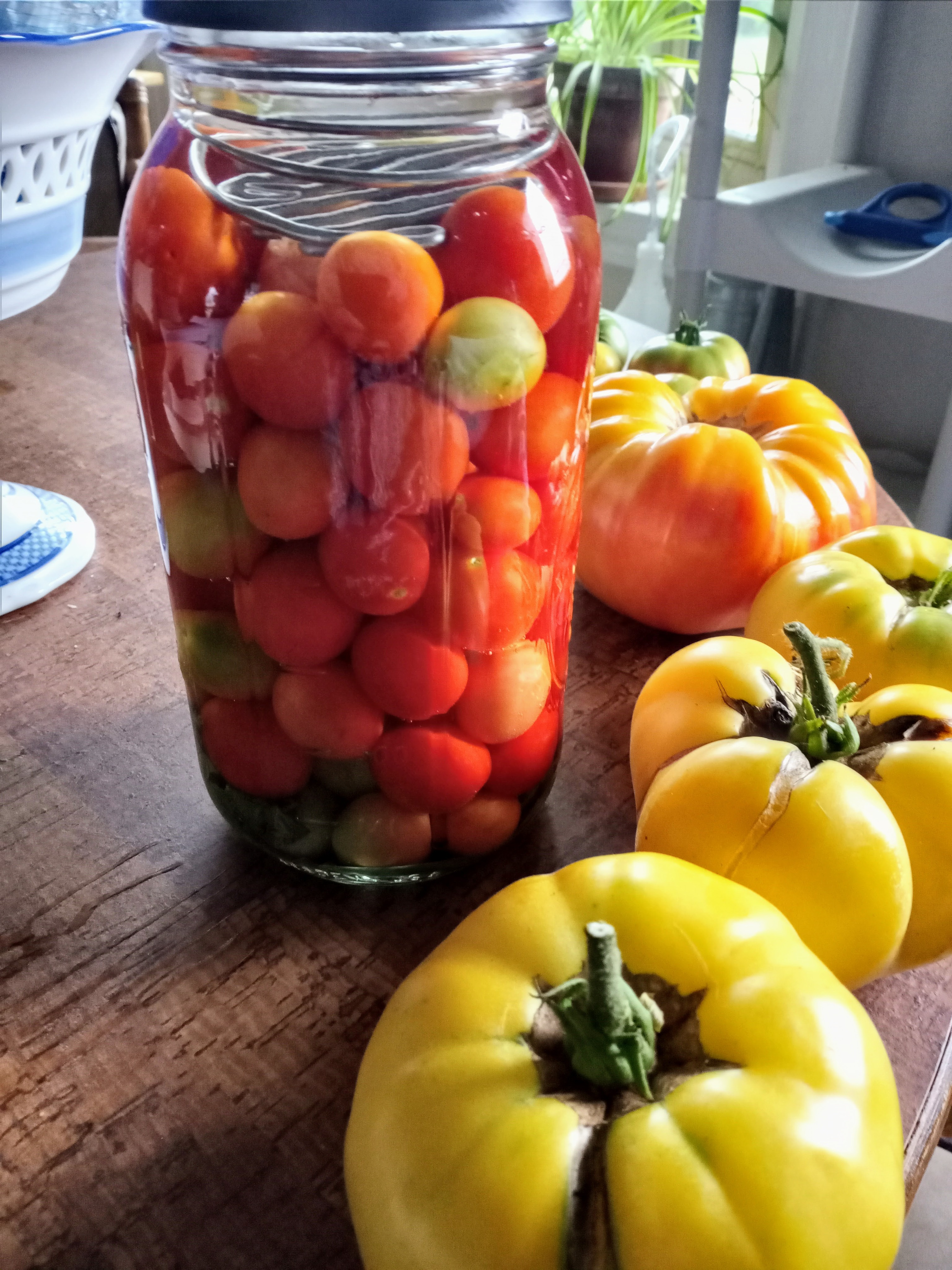
Every couple of summers the same thought shows up: this is the year to ferment tomatoes instead of canning them. The idea sits quiet for a season or two, then late summer arrives, the vines are loaded, and suddenly a jar of tomatoes on the counter looks like a good experiment again.
This year's batch is a mix. Most of the fruit came from established plants, ripe and ready. A friend added a handful of yellow tomatoes to the pile - possibly a pineapple variety, based on the size and color, though the exact name isn't confirmed. Mixing varieties in one jar is part of what makes fermenting interesting: each type brings its own sugar content, skin thickness, and water level to the ferment, so the end texture reflects the blend.
Fermenting tomatoes works differently than fermenting cucumbers or cabbage. The high water content and soft flesh mean the texture shifts more than a firm vegetable would. Some batches come out with a pleasant tang and just enough structure to hold their shape. Other times the tomatoes soften into something closer to a chunky sauce. Adding a portion of under-ripe fruit is one way to test whether firmer, less-sugary tomatoes hold up better through the process. Under-ripe tomatoes carry less sugar for the lactic acid bacteria to work with, and their cell walls are still tighter, so they tend to break down more slowly than a fully ripe fruit.
The process itself stays simple. Whole or halved tomatoes go into a jar with a saltwater brine, weighted down so they stay submerged, and left at room temperature out of direct light. Fermentation happens fastest in a spot around 65 to 75 degrees. A kitchen counter or pantry shelf usually works. Checking daily for the first week catches any mold that forms on the surface early, when it's easiest to skim off without disturbing the batch underneath.
Late summer is the natural window for this project. The tomato harvest is heavy enough that preservation matters, and warm days keep the fermentation moving at a reasonable pace. A cellar or unheated back room that runs cooler will slow the process down and stretch it out over several weeks instead of several days - not a problem, just a different timeline.
For anyone trying this for the first time, a small batch is the way to start. A quart jar with a dozen tomatoes gives a real sense of the texture and flavor without committing a full harvest to an experiment that might come out softer than expected. If the yellow tomatoes in this batch turn out to be a pineapple variety, their lower acidity compared to a standard red tomato could shift the fermentation time slightly - lower-acid fruit sometimes ferments a touch faster since the environment starts closer to neutral.
Saving a small amount of brine from a successful ferment to start the next batch is a trick worth remembering. It gives the new jar a head start with established bacteria culture already present, similar to saving a bit of sourdough starter between bakes.
Whether this batch turns out silky-soft or holds a decent bite, it goes into the rotation of preserved summer tomatoes alongside the canned and dried ones already on the shelf. Variety in preservation method means variety in how these tomatoes taste come winter, and that's reason enough to keep the experiment going every few years.
Want a plan that matches your zip code?
Get your free planting calendar →