The First Fig Finally Shows Up in Late Summer
A single green fig appears on a tree that spent two seasons struggling in a pot before finding its footing in the ground.
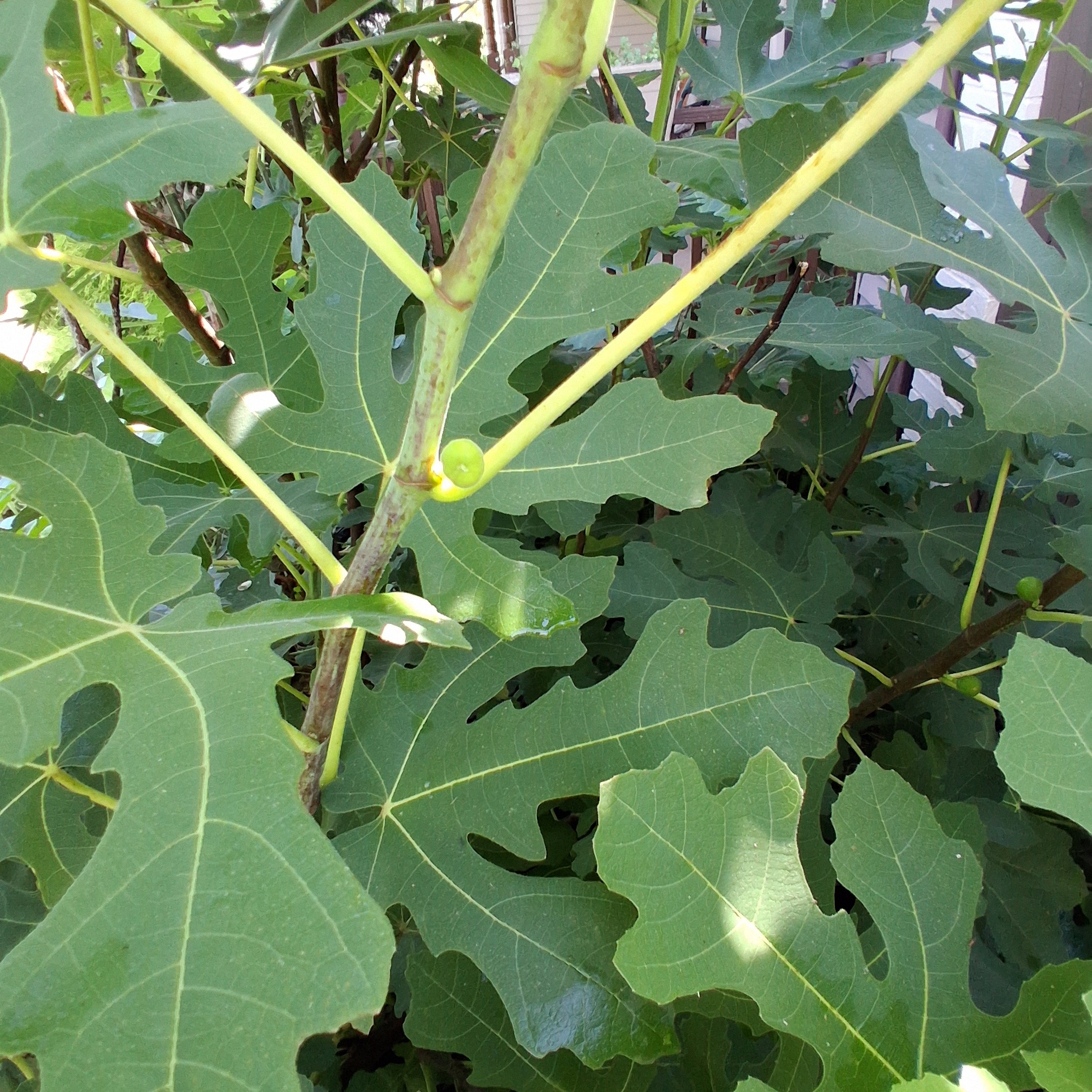
A single green fig has shown up at the leaf nodes of a tree that spent two seasons stuck in a pot before it went into the ground on the northwest side of the house. That spot gets less afternoon sun than a south or west exposure, so this tree runs a little behind the fig trees soaking up full sun all day. The fruit is small and firm right now, still weeks from the soft, slightly drooping stage that signals it's ready to eat.
Many fig varieties set two crops in a single growing season. The breba crop forms on last year's wood and ripens early in summer. The main crop forms on new growth put on this year and ripens later, often stretching into fall. A tree planted in a spot with reduced light will lag behind on both crops, and that's exactly what's happening here - the tree is healthy and putting on plenty of leaf growth, and the fruit is simply taking its time to catch up.
Container-grown fig trees often struggle for a season or two. Roots stay confined, the soil dries out fast in hot weather, and the tree spends its energy staying alive rather than putting out new wood and fruit. Once roots have room to spread in native soil, growth speeds up. That's the pattern here: two slow seasons in a pot, then a real jump in size and vigor after transplanting, even in a spot that isn't the sunniest corner of the yard.
For anyone with a fig tree in the ground, a few things are worth watching as the fruit develops:
- Watch the stem where the fruit meets the branch. Figs droop slightly and soften when close to ripe. A fig still firm and upright needs more time.
- Skip a fixed watering schedule and check the soil by hand. A tree with deep roots in the ground needs less supplemental water than one in a container, but a dry stretch during fruit set can still push fruit to drop early.
- Watch for splitting skin after heavy rain right before harvest. Figs pull in water fast, and a big drink after a dry stretch can split the fruit. Pick figs a touch early if a storm is coming.
A fig tree on the north or northwest side of a house gets more shade than one on the south side. That shade slows ripening. It protects the tree from harsh afternoon sun in hot climates too. Gardeners in warmer zones may find a partial-shade spot actually keeps a fig tree productive over a longer stretch, since the tree isn't stressed by intense heat every afternoon.
A young fig tree, newly planted or moved from a pot, benefits from a layer of mulch around the base to hold moisture and keep roots cool. Skip fertilizer heavy in nitrogen once the tree settles in - too much pushes leaf growth at the expense of fruit. A light feeding of compost in spring is plenty for most fig trees.
This first fig of the season is a small thing, but it marks the start of a run that tends to pick up speed as the season goes on. Once a fig tree settles into the ground and finds its rhythm, the number of fruits at each leaf node multiplies fast, and the harvest window opens up over several weeks.
Want a plan that matches your zip code?
Get your free planting calendar →