Late Summer Cucumbers - What to do with them, and when to plant them
That ugly yellow cucumber isn't necessarily headed for the compost. A late, overgrown harvest can still earn its keep as pickle relish.
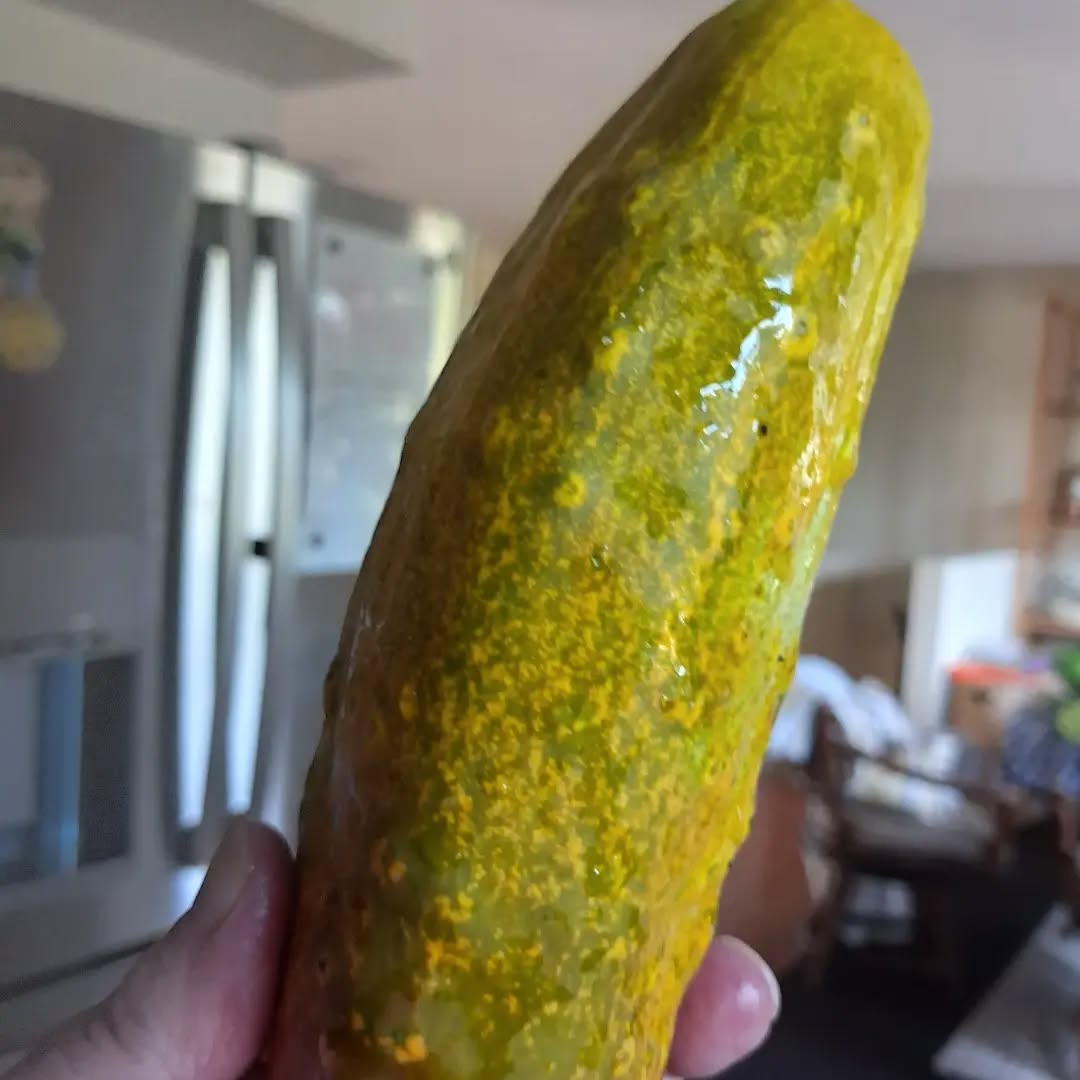
Late summer cucumbers are sneaky.
One day they look perfectly fine under the leaves. A few days later, you find one that looks like it’s been hiding there for a month. Huge, mottled, starting to turn yellow.
That was this one.
It was overgrown and bitter, so it was not going into a salad. But that does not mean it had to go to waste.
What to do when you find an overgrown cucumber
First, pick it.
Once a cucumber stays on the vine too long, the skin gets tougher, the seeds get bigger, and the flavor can turn bitter. Yellowing is usually a pretty good sign that it has gone past the stage you would want for slicing.
Leaving it on the plant does not help anything either. At that point, the plant is putting more energy into mature seed production instead of the younger cucumbers you actually want to eat.
I walk through my garden every day and I still miss them. Cucumbers are unbelievably good at hiding under leaves.
Step 1: Cut it open before you toss it
An ugly cucumber is not always a useless cucumber.
Cut it open and take a look.
If the skin is thick, peel it. If the seeds are large and hard, scoop them out. Then taste a small piece of the flesh.
If it is completely unpleasant, compost it.
If it is only more bitter than you would want fresh, you may still be able to use the better parts in something like relish.
That is what I did with mine.
Step 2: Turn the usable parts into relish
Once I trimmed away the parts I did not want, I chopped the cucumber with onion and sweet pepper.
From there, I salted it, let it drain, and used it in pickle relish.
If you are canning relish for shelf storage, use a current tested recipe from the National Center for Home Food Preservation or your university extension service.
Here is a tested pickle relish recipe from the National Center for Home Food Preservation.
This is one place where I do not improvise. Vinegar acidity and processing times matter when you are canning.
If you are making refrigerator relish, you have more flexibility.
Step 3: Check the plant for anything else hiding
Once you find one oversized cucumber, check the whole plant.
Look under the leaves. Check the back side of the trellis. Look near the ground.
Those are the places I miss them most often.
Harvest the younger cucumbers while they are still at the size and stage you actually want to eat them. Frequent harvesting helps keep the plant focused on producing more usable fruit.
Step 4: Help a tired late-summer plant along
By late summer, cucumber vines can start looking rough.
Heat, inconsistent watering, disease, and simple old age can all catch up with them.
Keep water steady at the root. Remove fruit that has gone too far. Try not to soak the leaves every time you water, and give the plant as much airflow as you can.
The goal is not to make an aging cucumber vine look perfect. It is to help it keep producing as long as the season allows.
Can you still plant cucumbers late in the season?
Sometimes.
In warmer areas, there may still be enough season left for another cucumber planting. But the calendar month by itself does not tell you much.
What matters is how much warm growing time you have left before frost.
A late sowing still needs enough time to grow, flower, and produce cucumbers before the season shuts down.
That is exactly why I track planting dates by location. The Fall Harvest Playbook shows the planting windows for cucumbers and other fall crops based on where you actually live.
This is also why I keep notes on varieties and planting dates even though I am very much a chaos gardener.
Intuition is great until you are standing in the kitchen with a giant yellow cucumber trying to remember when you planted the thing.
And for the record, ugly produce does not bother me.
I care much more about flavor than appearance. If part of something I grew is still useful, I am going to find a job for it.
In this case, that job was relish.
And the relish was excellent.
Want a plan that matches your zip code?
Get your free planting calendar →