Lunchbox Peppers Take Over the Late Summer Harvest
Lunchbox peppers are a small, sweet variety - one of the season's most reliable producers.
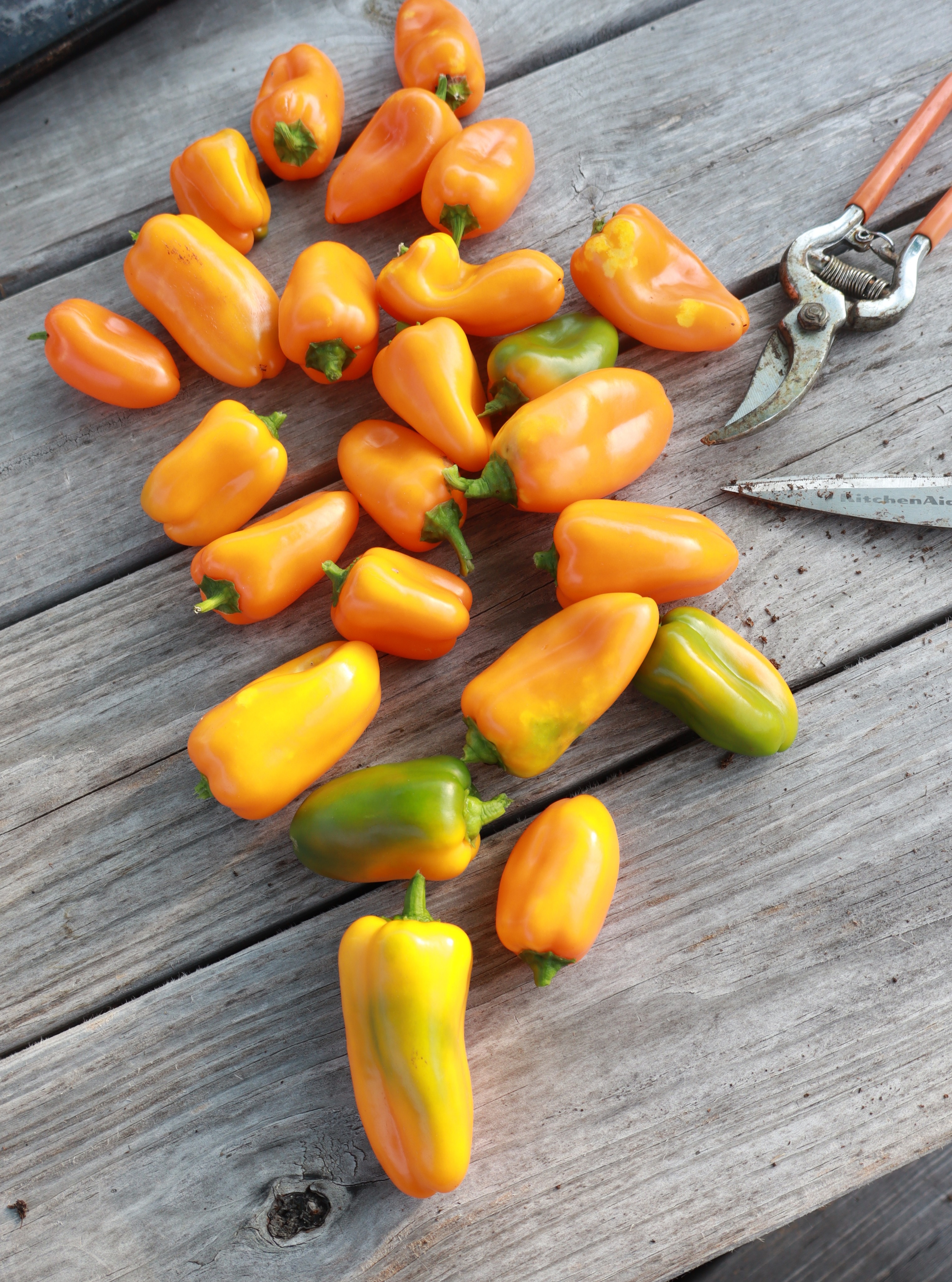
I just love these Lunchbox peppers.
Lunchbox peppers are having a moment in the garden this year. The plants have been loading up with small, blocky fruits in shades of orange, green, and yellow, and the harvest keeps coming faster than expected for a pepper this size.
These are snack peppers, close cousins to bell peppers but scaled down to fit in a hand or a lunchbox. The flavor sits in an interesting spot: sweeter than a classic bell, with a light touch of heat that never turns into a burn. That combination makes them good raw, straight off the plant, or pickled for later.
Where the plants are right now
By late summer the pepper plants are in full production mode. Fruit set happens continuously as long as pollinators stay active and nights stay warm. Each plant can carry dozens of small peppers at once, part of what makes lunchbox types so prolific compared to larger bell varieties - the plant puts its energy into quantity over size.
Color is a ripeness clue, not a hard rule. Lunchbox peppers can be picked green for a grassier bite, or left to ripen fully into orange, red, or yellow for maximum sweetness. Leaving fruit on the plant to color up slows new fruit set a bit, so a mixed harvest - some green, some fully colored - keeps production moving.
Harvest and handling
A garden knife or pruning shears work better than pulling by hand. Twisting or yanking pepper fruit can snap the brittle branches, especially once a plant is loaded down. A clean cut at the stem keeps the plant intact for the next round.
Once picked, lunchbox peppers hold up well on the counter for a few days, or in the crisper drawer for a couple of weeks. For a harvest this size, pickling is a practical way to use the volume without losing quality. A quick vinegar brine, some garlic and peppercorns, and a few days in the fridge turns a big bowl of peppers into something that lasts through the fall - good sliced onto sandwiches, chopped into salads, or eaten straight from the jar.
Keeping the plants productive
Consistent picking is one of the best ways to keep pepper plants producing right up to frost. Fruit left to over-ripen on the plant signals the plant to slow down, so regular harvest - every few days during peak season - keeps new flowers and fruit coming.
Feeding matters too, particularly for a heavy producer like a lunchbox type. A light side-dressing of compost or a balanced organic fertilizer helps sustain fruit set through the stretch between midsummer and first frost. Water needs stay steady: peppers don't like to dry out completely between waterings, but soggy soil invites root problems.
Looking ahead
For gardeners in cooler zones, lunchbox peppers are worth starting early next year - a longer season in the ground means more total fruit. In milder climates, a second round of transplants in midsummer can stretch the harvest into late fall.
Saving seed from a favorite plant is straightforward with peppers, since they're self-pollinating and mostly true to type when isolated from other pepper varieties. A few fully ripe fruits set aside now can become next year's seed stock, with a dry spot to finish curing.
Want a plan that matches your zip code?
Get your free planting calendar →