Petunias - How to Save Them
A surprise patch of fragrant petunias showed up in a poolside planter. Here's how to collect seed and take cuttings so this scent sticks around next year.
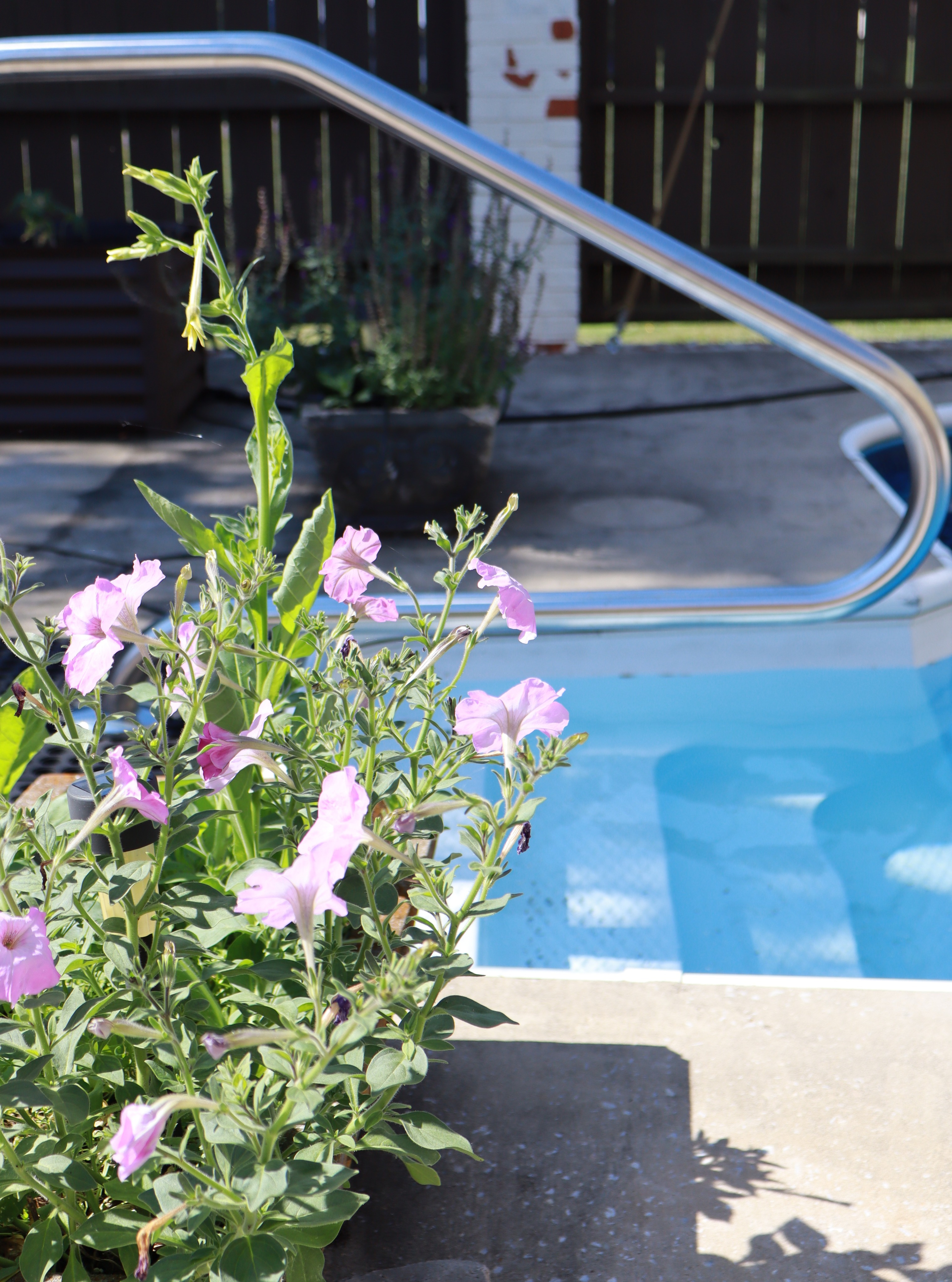
I get a version of this question every summer, usually from someone standing over a planter they don't remember filling. Petunias have a habit of showing up uninvited, and the poolside spot in this photo is a perfect example - warm, sunny, a little reflected heat off the concrete, and just enough water splash to keep the soil from drying out completely.
So, do petunias self-seed? Sometimes. Older heirloom-type petunias will drop seed and come back on their own, sometimes in a slightly different color than the parent plant. Modern hybrid petunias - the Wave and Supertunia types most garden centers sell - are grown from cuttings or treated seed, and their offspring often don't look much like the plant you bought. A seedling might bloom smaller, paler, or less fragrant than the original. That's the risk with hybrids: the traits that make them special don't always pass down.
If this scent is one worth keeping, don't leave it to chance. Two methods work well.
Collecting seed Let a few spent blooms stay on the plant instead of deadheading them. Behind each flower, a small round pod will form and dry to a papery brown. Snip the pod into an envelope before it splits open, and keep it somewhere dry over winter. Seeds saved this way are a gamble on hybrids but free, and a fun experiment if you have the space to try.
Taking cuttings This is the more reliable route for keeping the exact plant you have now. Snip a 4-6 inch piece from a healthy stem, strip off the lower leaves, and set the cutting in a small glass of water or a light potting mix kept damp. Roots typically show within one to two weeks. A rooted cutting grows into a genetic copy of the parent plant, so the fragrance and color stay true.
A few notes for a poolside spot: chlorine splash can stress petunia foliage over time, so a planter set back a foot or two from the edge, or one with a saucer to catch overspray, tends to perform better through the season. Petunias also want full sun and soil that drains fast - soggy roots are the most common reason a healthy-looking plant suddenly collapses.
As for the fragrance peaking at sunset, that's not your imagination. Many petunia varieties release more scent in the evening to attract moths, which pollinate at night. If there's a vegetable bed nearby, that same evening activity can spill over and support pollination on squash or beans growing close by. Flowers and vegetables aren't separate worlds in a garden - they're often working the same shift.
Want a plan that matches your zip code?
Get your free planting calendar →