One Eggplant Plant, More Fruit Than We Can Eat
One prolific eggplant plant, a couple of cucumbers, and basil that reseeds itself - a late-summer harvest that just keeps giving.
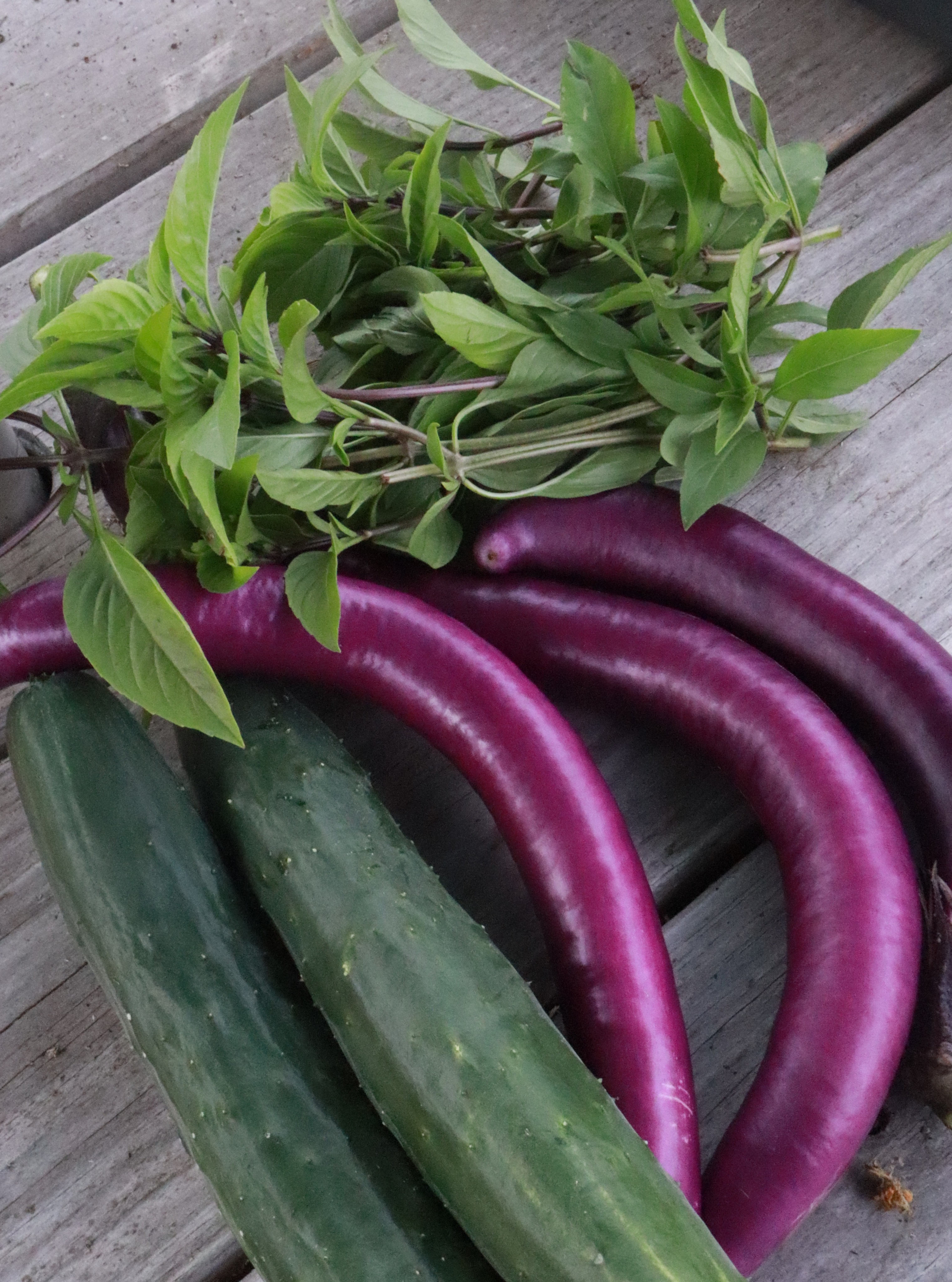
Late summer brings this kind of harvest: long purple eggplants stacked next to a couple of dark green cucumbers, a fat bundle of basil stems on the boards. One eggplant plant, set out back in spring, is now producing more fruit than a household can eat.
Long, slender eggplant varieties (sometimes called Asian or Japanese types) tend to be heavy producers once the plant hits its stride. The first few fruits take the longest to form; after that a healthy plant settles into a rhythm, setting new blossoms almost as fast as fruit is picked. Harvesting often - every two to three days at this point in the season - keeps the plant putting energy into new flowers instead of holding onto oversized, seedy fruit.
Signs a fruit is ready: the skin has a glossy sheen and the flesh gives slightly under a thumb press. Once the skin turns dull or the fruit feels hard all the way through, it's past its best - still edible, but the seeds inside will be tougher and more numerous. A pair of snips or a sharp knife works better than twisting, which can tear the stem and open the plant to disease.
Cucumbers in this photo are riding along on the same schedule. Both crops love full sun, consistent moisture, and soil that's been fed well ahead of planting - so it's common to see them peak together in a mixed summer bed.
Thai basil is the quiet trick in this harvest. Left to its own devices late in the season, basil sends up flower spikes, and those spikes going to seed is exactly how the plant drops enough to reseed the bed on its own the following year. No transplants, no starting trays - just volunteer seedlings showing up in spring where last year's basil once stood. Bees and other pollinators visit those flower spikes, bringing extra pollinator traffic to the whole bed - a small benefit for eggplant and cucumber blossoms nearby, both of which set fruit better with steady pollinator visits.
A gardener wanting basil to reseed can leave a few stems unpicked through late summer, letting them flower and dry right on the plant. Seed drops onto the soil on its own, ready to overwinter and sprout with the first warm days.
Warmer growing zones (7 and up) see this self-seeding happen reliably, since the ground rarely freezes hard enough to kill seed sitting on the surface. Cooler zones can help the process along with a light layer of straw mulch over the bed through winter, or by collecting seed by hand and storing it somewhere dry and cool for spring sowing.
By the end of the season, this bed will have paid for its space many times over: a single eggplant plant carrying a household's supply, cucumbers filling in the gaps, and basil that plants itself year after year without a seed packet in sight.
Want a plan that matches your zip code?
Get your free planting calendar →