Pepper planting guide for the South
The orange peppers finally got picked. Waiting for full color took some restraint, but ripe sweet peppers are absolutely worth it.
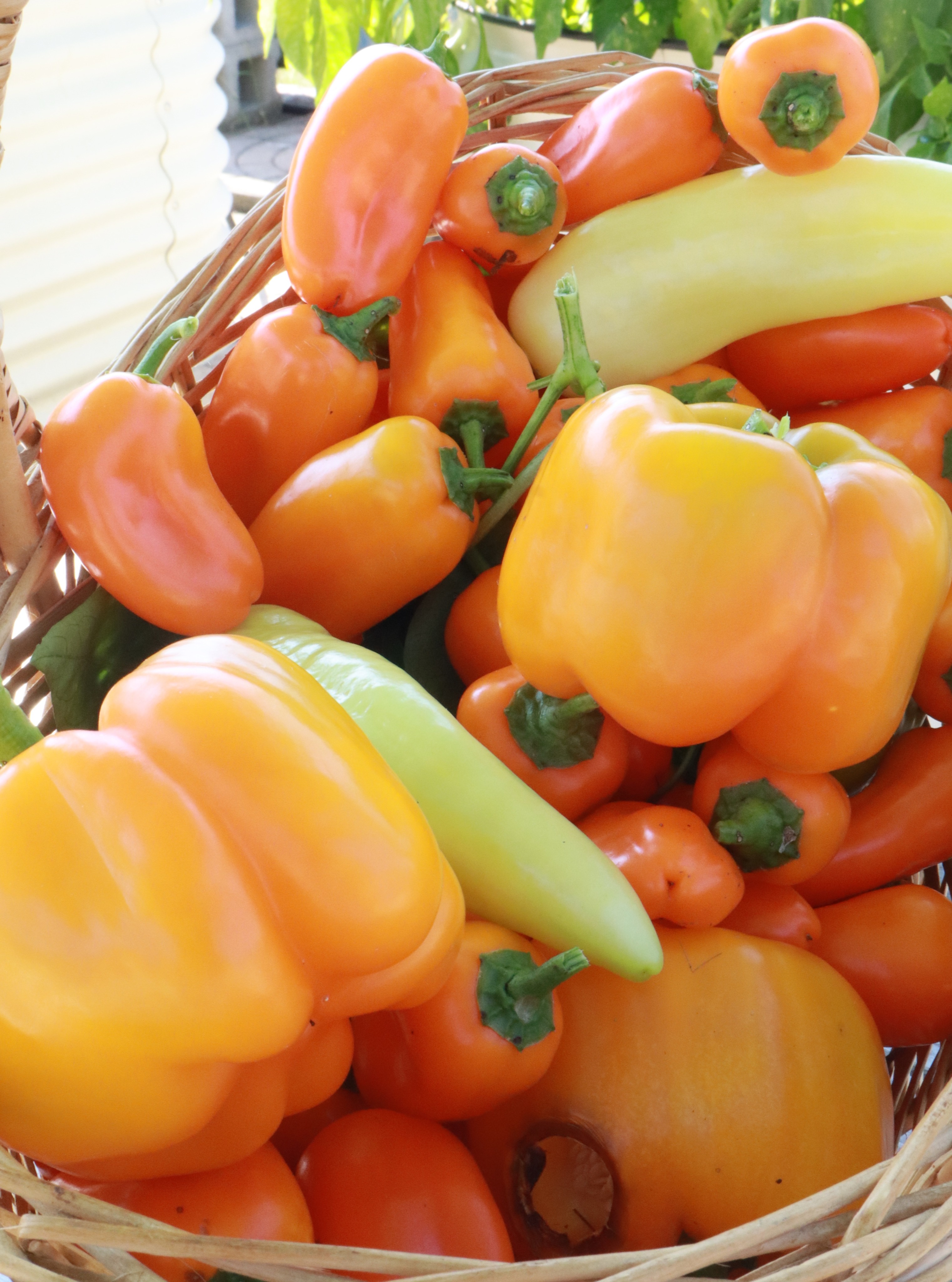
This was an orange pepper morning. A whole basket of them, with a few yellow peppers mixed in.
I wanted to pick these earlier. Badly. Sweet peppers are perfectly edible when they're green, but leaving them on the plant gives them time to reach their mature color. The flavor gets sweeter and fuller too. Patience wins here, which isn't always my strongest gardening skill.
When peppers ripen
Peppers start green and change color as they mature. Depending on the cultivar, that final color can be orange, yellow, red, purple or something in between. Days to maturity on the seed packet are useful, but I trust the actual pepper more than the calendar.
Look for full size, a firm pepper and color spreading across the fruit. You don't have to wait for every trace of green to disappear. Pick one at different stages and taste them. That's a much better way to figure out the stage you prefer.
Late summer can produce a pile of peppers fast. Keep harvesting and the plants can keep setting fruit as long as temperatures cooperate. Heat, water stress and cold nights can slow things down. Southern gardens often get a nice late flush after the worst summer heat backs off.
Picking peppers without wrecking the plant
Use garden snips or pruners and cut the stem. Pepper branches can be brittle, and yanking fruit off is a fine way to snap a productive branch. I learned the hard way.
Do a daily garden walkthrough too. A pepper hidden under leaves can go from nearly ready to critter lunch before you know it. Case in point - one of mine has a hole near the bottom. Something found breakfast before I did. I kept it in the photograph. That's gardening.
Check damaged fruit closely. A superficial blemish is one thing. Soft tissue, spreading decay, mold or obvious insect activity inside means it goes into the compost only if your compost system can safely handle it. When in doubt, toss it in the trash. I'm picky about what comes into my kitchen.
Keeping peppers productive late in the season
Keep the soil consistently watered without leaving roots sitting in saturated ground. A layer of mulch helps moderate soil temperature and reduces evaporation. Skip a late-season blast of high-nitrogen fertilizer. Loads of new foliage aren't particularly useful when what you want is ripening fruit.
Watch nighttime temperatures as fall gets closer. Peppers love warmth and don't tolerate frost. Gardeners farther north will have a shorter window than those of us with long Southern seasons. If cold weather is closing in, harvest the usable peppers rather than sacrificing them to frost.
Healthy pepper flowers draw pollinators during the growing season, and mixed plantings give beneficial insects more places to feed and shelter. I like a kitchen garden that's productive and a little chaotic. It doesn't need to look like graph paper to work.
What to do with a basketful
Fresh ripe peppers don't need much intervention. Slice them into salads, roast them until the edges char, sauté them with onions or freeze chopped peppers for later cooking. I freeze plenty. Grocery store peppers are expensive and frequently disappointing, so future me is always pleased to find garden peppers in the freezer.
If you're planning next year's pepper patch, rotate them away from spots recently occupied by other nightshades such as tomatoes, eggplants or potatoes when your space permits. Clear badly diseased plant material at the end of the season and make a quick note of which cultivars actually earned their garden space.
That's the part my chaos-gardener brain has learned to respect. Plant by feel if that's how your brain works. Just write down enough to know what worked. The interwebs can't tell you which pepper performed best in your particular dirt.
And wait for at least a few peppers to reach their full color. I know. It's hard. Do it anyway.
Want a plan that matches your zip code?
Get your free planting calendar →