Pepper Planting Guide for the South and Fall Harvest
The cayenne peppers needed to come out of the garden. Now they're hanging in the shed to finish ripening and dry for homemade pepper powder.
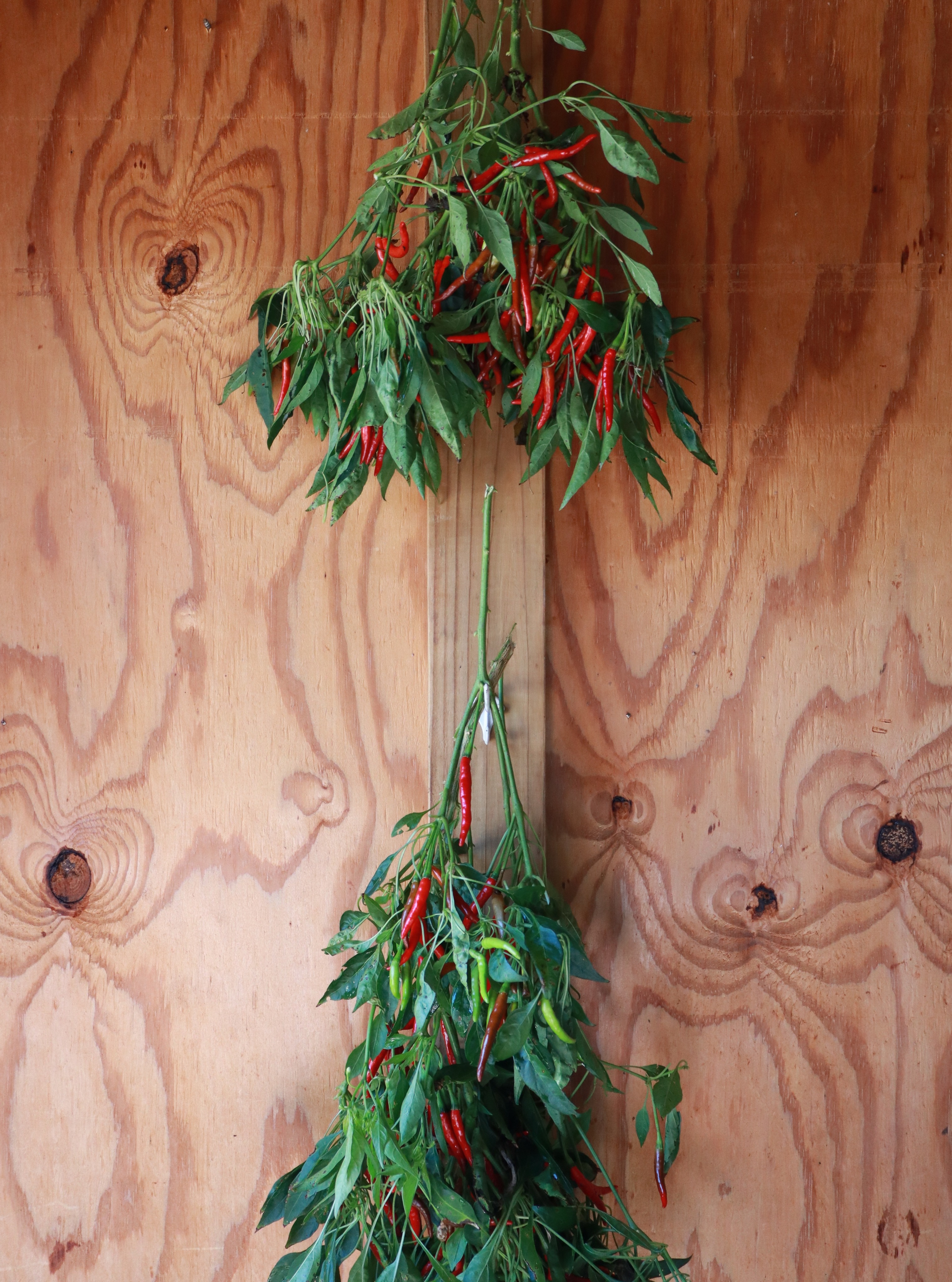
It was time to pull the cayenne peppers. I needed the garden room, and at this point in the season I'm not sentimental about it. Fall crops need somewhere to go.
The peppers are hanging in the shed now. Some are already red and some are still green. Cayennes can continue changing color after harvest if the fruit was mature enough when picked. I leave mine hanging with good air circulation and check them regularly. Any pepper showing soft spots, mold, or decay gets tossed. Don't cram fresh peppers into a jar and hope for the best. They need to be fully dry before storage.
Once they're completely dry and brittle, I'll jar some whole and grind some into powder. Wear gloves when handling hot peppers, and be careful grinding them. Cayenne dust in your eyes or lungs is a miserable experience. Ask me how I know. A dedicated spice grinder is handy if you do this every year.
This is one reason I grow cayenne. A relatively small planting can supply the kitchen long after the plants are gone. I use the powder anywhere I want heat, and homegrown peppers have much better flavor than the dusty jar that's been living at the grocery store since who knows when. I am picky about this stuff.
For Southern gardens, peppers are warm-season plants. Plant them after frost when the soil has warmed, then give them the long summer to produce. They can keep going well into fall in mild weather. Your timing will shift with your location, so use your local first and last frost dates rather than somebody else's calendar on the interwebs.
By September I'm deciding which summer plants still earn their square footage. Productive pepper plants can stay if there's room. Mine had reached the point where I valued the bed space more. That's chaos gardening with a tiny bit of discipline thrown in.
Clearing old plants gives me a chance to inspect the bed, remove diseased material, add compost if the soil needs it, and get the next crop moving. Healthy pepper plants can go into the compost. Plants with serious disease problems go elsewhere so I'm not carrying trouble forward.
The hanging peppers are a nice visual marker of the season too. Summer isn't quite finished here, but the kitchen garden is already shifting toward fall. One crop comes out, another goes in, and the cayennes keep earning their keep from the shed.
Want a plan that matches your zip code?
Get your free planting calendar →