Finally Got Potato Timing Right in Tennessee
After several seasons of trouble, a Tennessee potato bed finally came through - full trays of tubers, and not a drop of irrigation all summer.
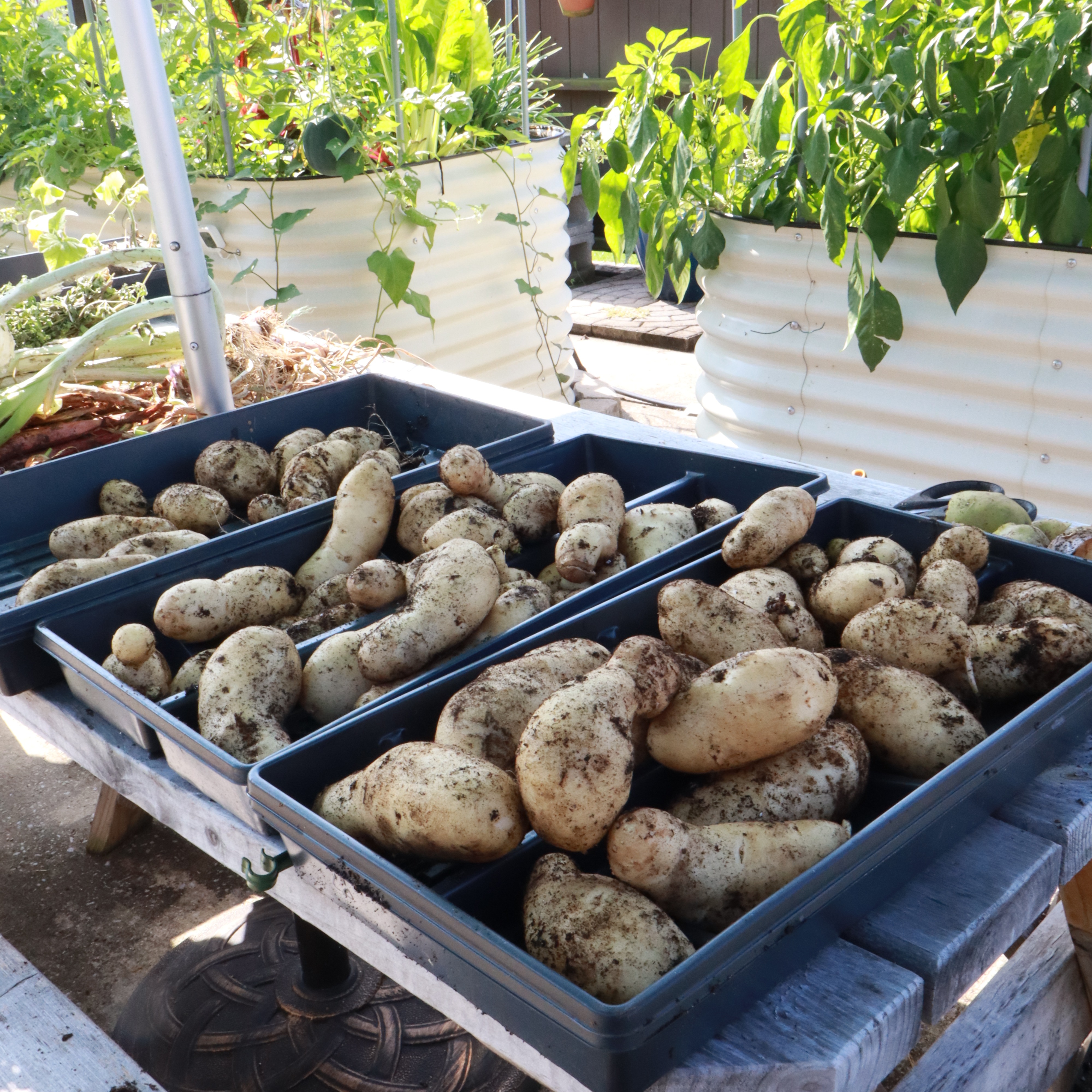
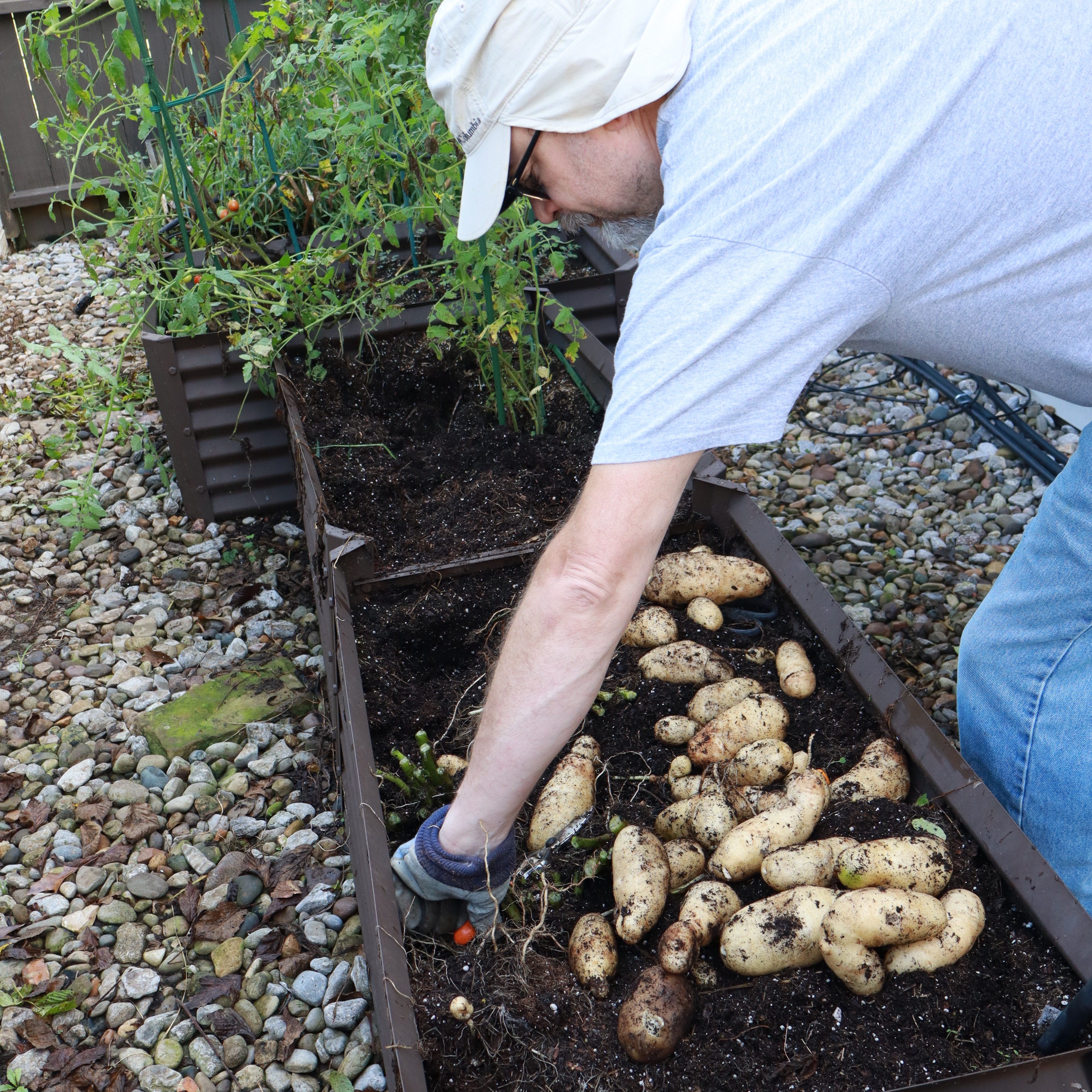
A Long-Awaited Potato Win
Potatoes look simple on paper. Tuck a seed potato in soil, wait a few months, dig up a harvest. Growing them well in Tennessee took several seasons to figure out.
Soil here warms and cools on a different schedule than places like Oregon. A planting date that works in the Pacific Northwest can miss the window completely in the mid-South. This year the timing lined up, and the trays in these photos show the result: a full table of freshly dug tubers, soil still clinging to the skins.
Reading the Signs Above Ground
Potato foliage tells the story of what's happening underground. Green, bushy tops mean the plant is still building tubers. Yellowing leaves that start to flop over signal the tubers are close to full size. Foliage that's died back completely is the cue to dig.
In these photos, the tops have gone brown and collapsed - a clear sign harvest time arrived. Pulling potatoes too early trades yield for smaller tubers. Waiting past full die-back risks rot in wet soil, or damage from soil pests drawn to exposed, mature tubers.
Why Timing Beats Effort
These potatoes got zero irrigation all summer and still produced a strong crop. That's the payoff of getting the planting date right. Potatoes set into soil at the correct temperature build a strong root system before summer heat and dry stretches arrive. A plant that's already established handles a dry spell far better than one still trying to get going.
For a hot, humid climate zone, spring potatoes typically go in the ground several weeks earlier than a grower coming from a cooler coastal climate would guess. Soil temperature drives the decision more than the calendar - seed pieces want soil in the mid-40s to low 50s Fahrenheit before they'll sprout without rotting.
A Second Planting Window
Many gardeners don't realize potatoes can go in twice a year in warmer zones. A July planting for a fall harvest is a real option in Tennessee, timed so the crop matures before the first hard frost. Missing that window by a week or two can push harvest dangerously close to cold weather - marking the date on a calendar and setting a reminder pays off.
Finding bed space for a second round means thinking about what's already growing. Tomatoes still producing in the next bed hold their spot through fall, so a second potato planting might mean a container, a grow bag, or a freshly cleared corner of the garden.
Curing and Storing the Harvest
Fresh-dug potatoes benefit from a curing period before long-term storage. Spreading them out in trays, in a warm, dry spot out of direct sun for a week or two, toughens the skins and helps minor nicks heal over. Skip this step and the harvest is more likely to soften or sprout early in storage.
Once cured, a cool, dark, well-ventilated spot keeps potatoes in good shape for months. Check trays now and then for any tuber going soft, and pull it before it spreads.
Building on This Success
A win like this is worth writing down. The planting date, the seed potato variety, the days to harvest - that record becomes the map for next year, and for the July planting still on the table.
Rotating next year's potato bed to a new spot in the garden keeps soil-borne issues like scab and blight from building up in one location. Potatoes and tomatoes belong to the same plant family, so keeping distance between this year's potato bed and next year's tomato planting helps both crops along.
Want a plan that matches your zip code?
Get your free planting calendar →