Rooting Tomato Cuttings for a Second Wave of Fruit
Pruned tomato stems don't have to go to waste - root them in water for fresh plants that keep producing right up to first frost.
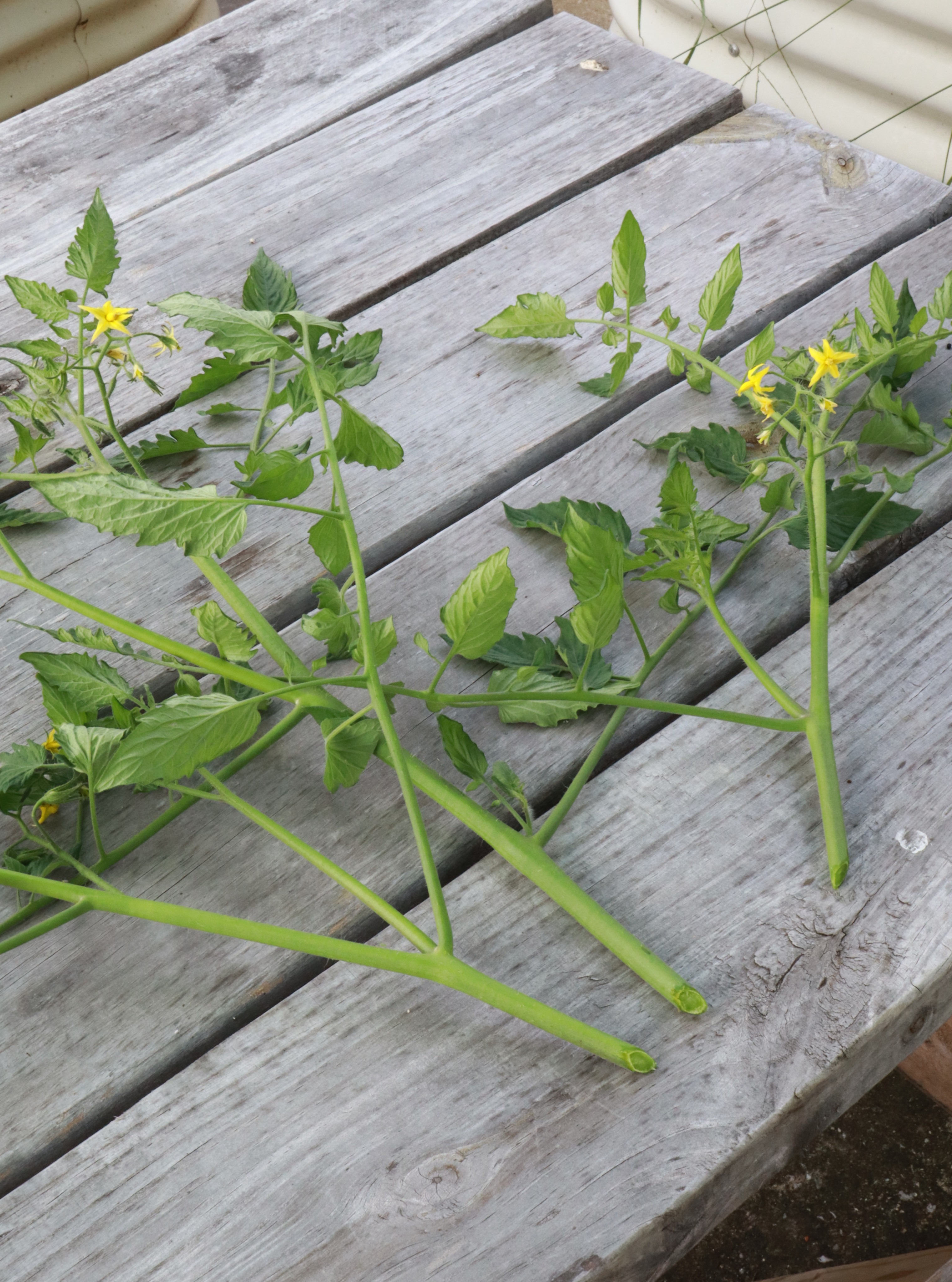
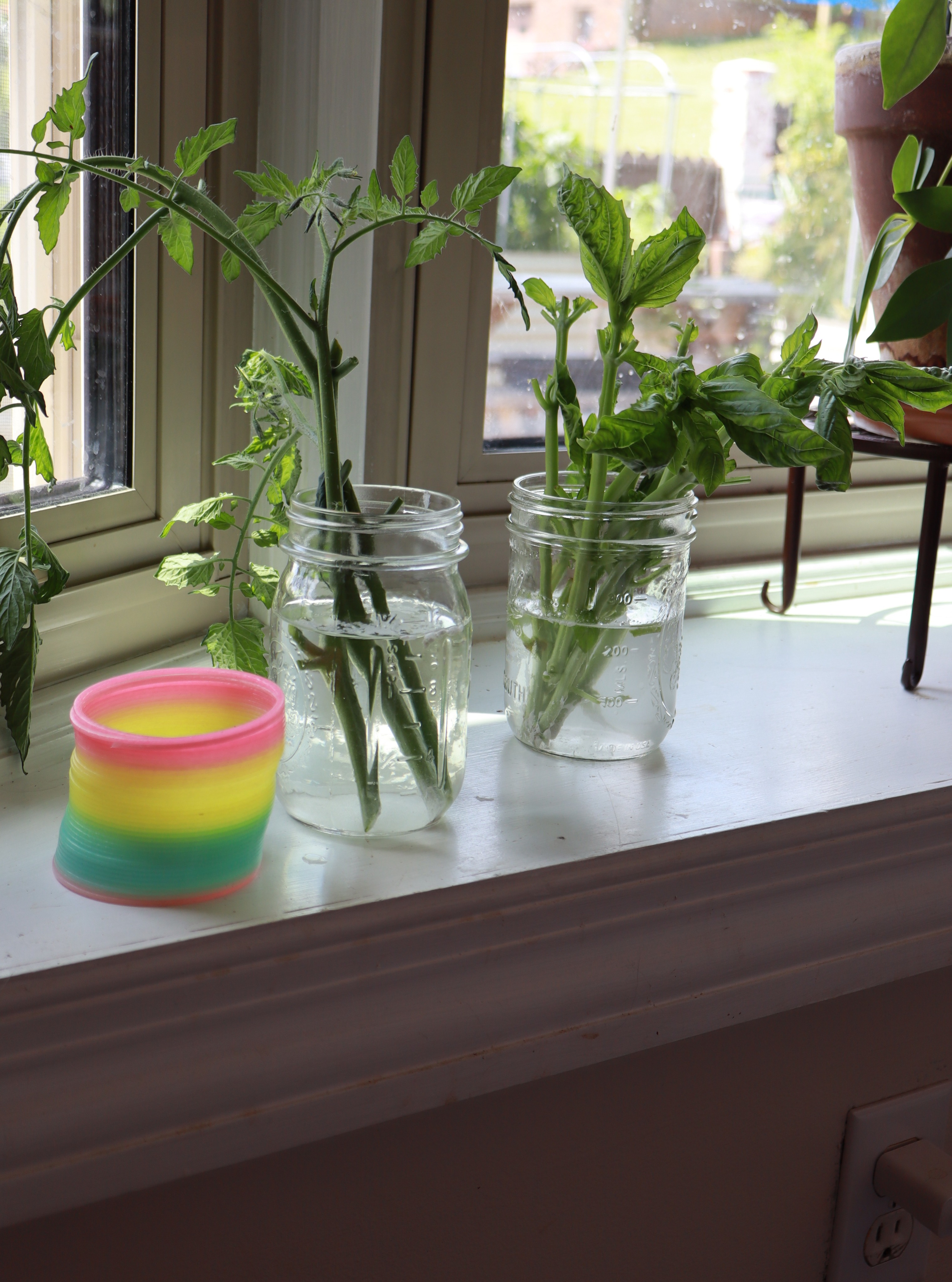
Why bother propagating tomatoes in midsummer?
By late July, indeterminate tomato vines have put out more growth than most gardeners can use. Every time you prune suckers or trim back a sprawling vine, you're holding a handful of stems that can become full new plants. Rooting them in water is the easiest form of propagation in the garden - no rooting hormone, no special equipment, just a jar and a sunny windowsill.
How the process works
Cut a healthy side shoot or sucker, four to six inches long, right above a leaf node. Strip the lower leaves so at least two nodes sit below the water line - roots form fastest from those bare nodes. Set the stems in a mason jar of water on a bright windowsill and change the water every few days to keep it fresh and free of algae.
Within a week you'll see small white roots forming. Give it two weeks and the stems will have enough root mass to go straight into the ground or a pot.
Getting cuttings into the garden
Once roots are an inch or two long, transplant directly into prepared soil. Water in well and give new transplants some shade for the first few days if the weather is hot - this reduces transplant shock as roots settle into soil rather than water.
This trick buys real time. A cutting rooted in late July can be producing tomatoes by September, right up until first frost. It's a simple way to stretch the harvest window without starting a whole new round of seeds.
Basil works the same way
Basil cuttings root just as fast, sometimes faster than tomatoes. Snip a stem below a node, strip the lower leaves, set in water. In a week or two you'll have a rooted cutting ready for a pot on the counter or a spot in the garden. This is a good way to keep a steady basil supply going all season without buying new seedlings.
A few notes from experience
Cats seem to find jars of stems irresistible - mine treats them like multicolored slinkies, batting at every stem, so cuttings need a spot out of paws' reach. Rotate the jars so all sides get light and roots grow evenly. Not every cutting takes - if a stem turns mushy or yellow before roots form, toss it and try again with a fresh cut.
Propagating cuttings costs nothing and turns pruning scraps into new plants. It's one of the simplest ways to keep a kitchen garden productive right through the end of the season, and to have extra plants on hand to share with neighbors.
Want a plan that matches your zip code?
Get your free planting calendar →