Butternut Squash Planting Guide for the South
This was a heck of a butternut squash year. A table full of cured squash means plenty for fall dinners and plenty to stash for later.
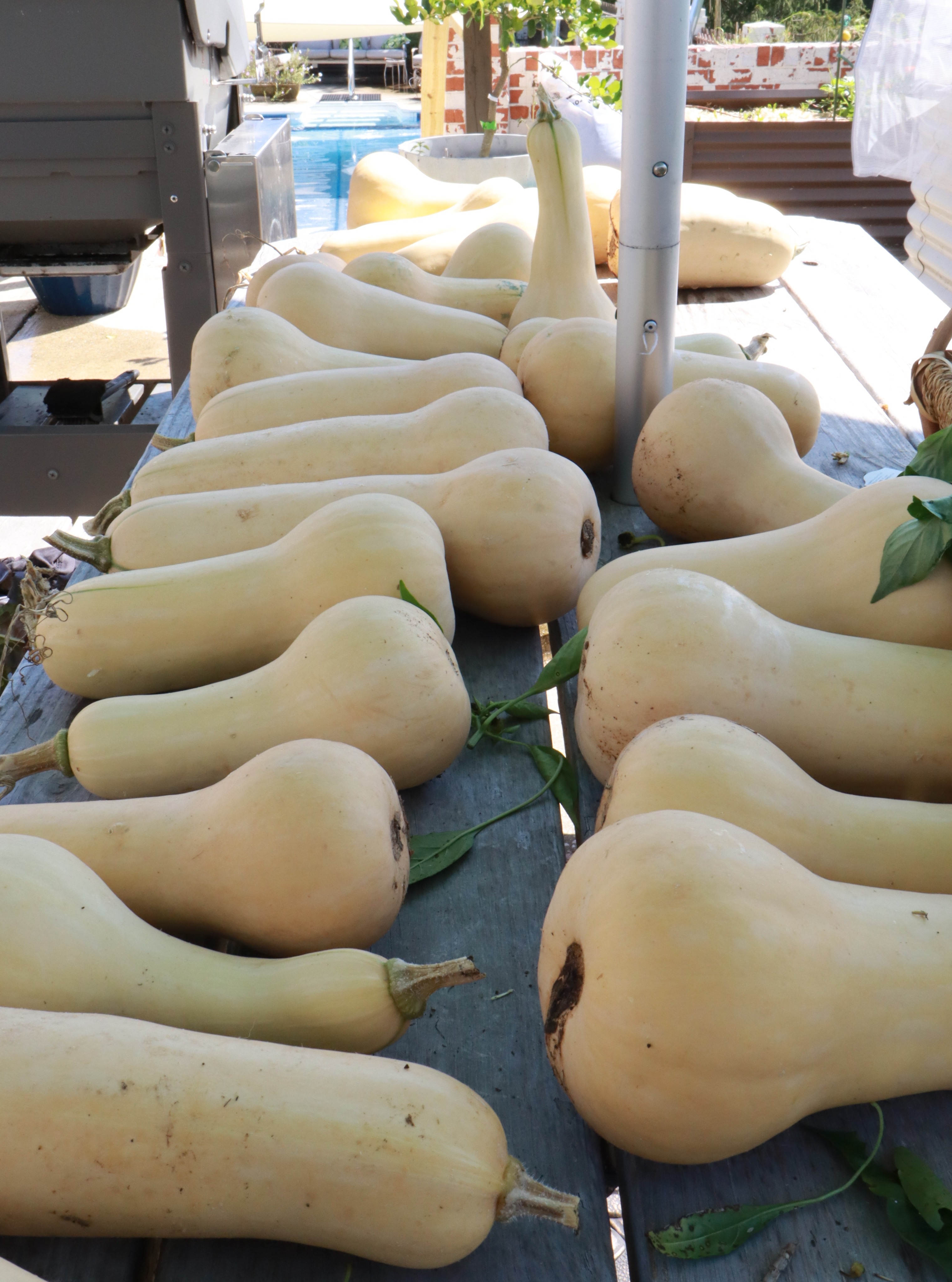
This year's butternut squash harvest was ridiculous. In a good way. We had squash spread all over the outdoor table, and I started wondering if everybody had the same kind of year.
Butternut squash loves heat, so it earns its space in a Southern summer garden. Plant after the soil has warmed and frost is done. Give the vines room. More room than you think. I am a chaos gardener, but squash will cure you of pretending a tiny gap in the garden is enough space. Those vines go wherever they please.
For much of the South, direct sowing in spring works beautifully. Gardeners with a long growing season can often make another planting in early summer. Farther north, starting seeds indoors a few weeks before the last frost can buy useful growing time. Your local extension service has frost dates if you need to nail down timing for your county.
Full sun and good drainage matter. I give squash rich soil with compost mixed in before planting, then water deeply rather than hitting the surface with a little water every day. Mulch helps keep the root zone from drying out so fast during brutal summer heat.
Squash flowers bring bees into the garden, and those bees do the pollination work needed to make fruit. Lots of flowers with tiny squash that shrivel instead of growing can point to poor pollination. Early in the season, male flowers often appear before female flowers. That's normal.
Then there are squash vine borers and squash bugs. I learned the hard way that ignoring the vines for a week can get ugly. Gardens need a daily walkthrough. Check stems, leaf undersides and new growth. Catching trouble early is much easier than trying to resurrect a collapsing vine.
At harvest, look for hard tan skin and a dry, corky stem. Don't yank the fruit from the vine. Cut it with pruners and leave a bit of stem attached. Handle the squash carefully since bruises and cuts shorten storage life.
I cure mature butternuts in a warm, dry place with good airflow before moving them into storage. Any damaged ones get eaten first. Sound squash can keep for months in a cool, dry spot, which is one reason I grow so much of it.
And I like to eat. Butternut goes into soup, gets roasted with olive oil and herbs, or gets mashed with butter. A table covered in homegrown squash heading into fall? I'll take that over grocery store squash any day.
Want a plan that matches your zip code?
Get your free planting calendar →