Braiding Red Torpedo Onions for Basement Storage
A messy but satisfying job - braiding this year's onion harvest and tucking it away in a cool, dark basement for the months ahead.
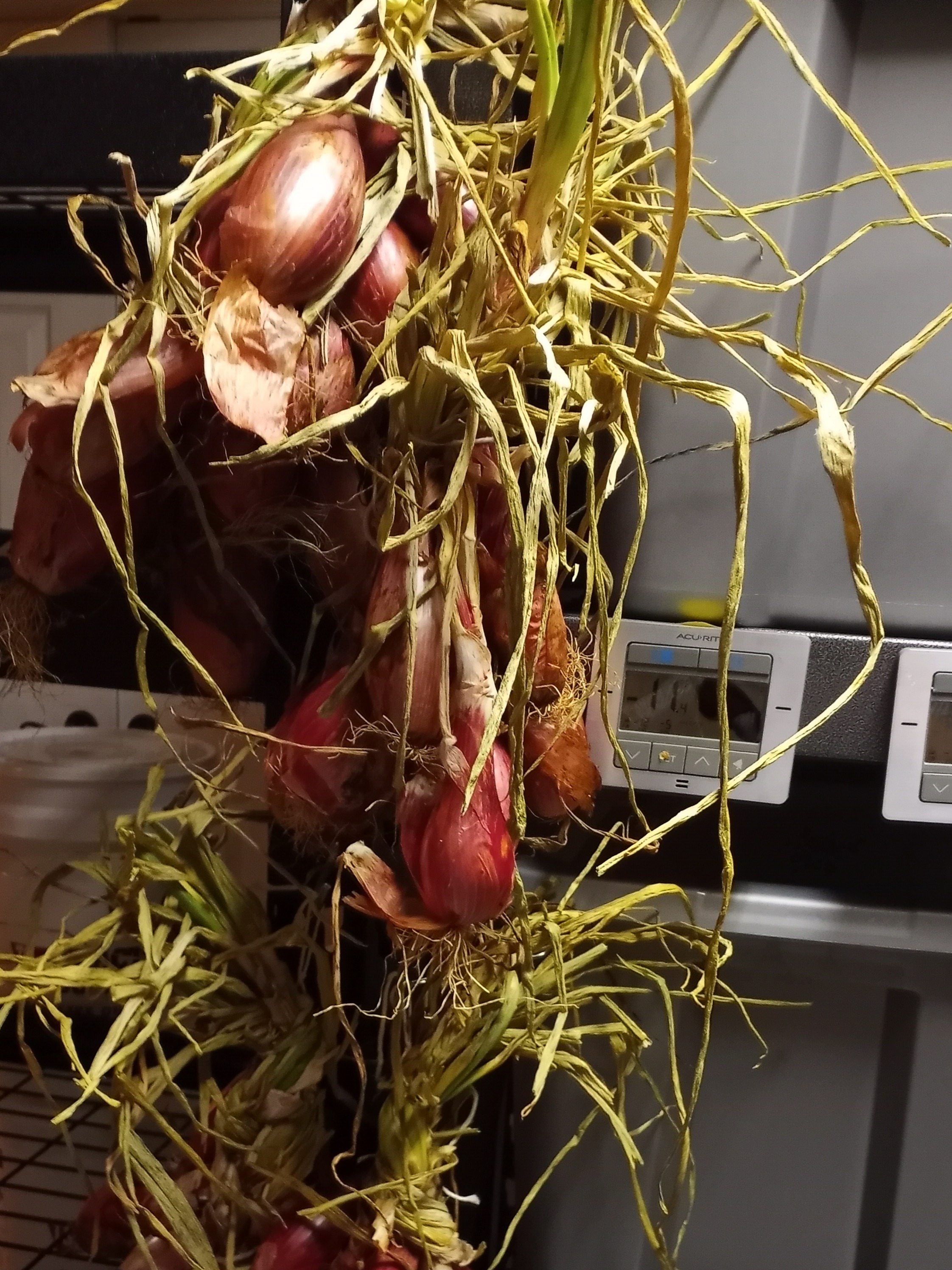
Braiding onions works the same way as braiding garlic, and every year I forget how messy it gets until my hands are covered in dry papery skins and bits of dirt. Worth it though - a braid of onions hanging in a cool spot is one of the most satisfying sights in the whole harvest season.
Once the tops are dry and the necks are cured, I bring everything down to the basement. Cool and dark is what onions and garlic want for long storage, and my basement holds steady at the right temperature for months. No fancy setup needed - just good airflow, low light, and a spot away from any dampness.
Red Torpedo is my go-to variety and I plant it every year without fail. It has great flavor and a nice long shape that makes for easy slicing, but it is not a long-term keeper the way some storage onions are. So my plan is simple: use them steadily through the fall, and the moment I spot any softening or sprouting, I slice them up and preserve small batches - pickled, dehydrated, or frozen. That way nothing goes to waste even though the variety itself won't hold all winter on its own.
A few things I watch for when curing and braiding:
- Necks and tops need to be fully dry before braiding, or you risk trapping moisture and rot inside the braid.
- Skip any bulbs with soft spots, bruising, or signs of mold - those go in the kitchen pile for immediate use, not storage.
- Hang braids somewhere with airflow. A basement corner near a small fan or vent works well if the air feels stagnant.
- Check stored onions every couple of weeks. Catching a soft one early keeps it from spreading trouble to its neighbors on the braid.
If you don't have a basement, a closet, cellar, or even a shaded porch corner can work as long as temperatures stay cool and light stays low. The goal is slowing down sprouting and rot for as long as possible.
How did your onion harvest go this season? What varieties are you storing, and what's your method for the ones that won't keep past a few months?
Want a plan that matches your zip code?
Get your free planting calendar →